Unknown's avatar

Posts by Stacey Gleddiesmith

Having spent over 20 years of my life leading worship and studying theology of worship (most recently during my MDiv at Regent College in Vancouver, BC), I am now on faculty at Columbia Bible College, where I am the Director of the Worship Arts Program. This program is unique in it's four-pronged approach to worship arts. Students begin with a solid grasp of the biblical theology of worship, are equipped with music and pastoral practice skills, and are also encouraged to explore other art forms. I love my job!

Holy Saturday – Facing the Darkness: Chapter 24 of Joan Chittister’s “The Liturgical Year”

Holy Saturday is one of the least observed days in the liturgical year – mostly because nothing happens. “There are no public ceremonies, no particular liturgies to interrupt the sense of waiting and vacuity that mark the day” (p. 152). It’s a day for growing – an activity we don’t usually take the time to notice, or consciously engage in. “Holy Saturday faith” says Joan Chittister, “is not about counting our blessings; it is about dealing with darkness and growing in hope” (p. 153).

Once again, I find that I cannot engage with the liturgical year, or write about it, without delving into the personal. How can I speak about facing the darkness unless I’m willing to bring my own darkness into the light? So let me tell you first that the surgery I had three weeks ago (for severe endometriosis) was unsuccessful, and now we wait – again – this time to see if funding goes through for me to travel to Oregon for another surgery (which may or may not be successful). There is a very real chance that my husband and I will never be able to have kids.

So when Chittister says “Someday we will all know the power of overwhelming loss when life as we know it changes, when all hope dies in midflight” (p. 153) – I know what she’s talking about. This Holy Saturday I will wait in the darkness, cradling a broken womb.
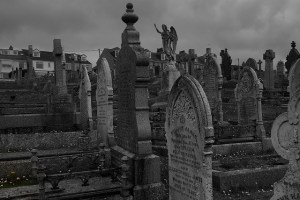
You see, Holy Saturday places us in the position of the disciples, who watched as their dreams were strung up on a cross – and buried. “No doubt about it: this is the day of going down into the tomb – our own as well as Jesus’” (p. 155). This is the day that all the dreams that have died, and all the losses we have experienced, rise to the surface and shake our faith.

But, as Chittister says, it is also a day for “growing in hope.”  “The important thing about Easter Saturday” she says, “is that it is precisely when its emptiness sets in that we begin to understand there is as much voice of God in emptiness as there is in anticipation. It is now, when we feel the absence of Jesus most keenly, that we can find ourselves listening to Him most intensely” (p. 155).

Now, more than any other time in my life, I find myself in constant dialogue with God. I always thought that a “life of prayer” was a complicated and difficult thing reserved for the spiritual greats among us, but this constant internal voice calling “help, help, help” is effortless. When a friend asked me what my relationship with God looks like in the midst of everything, I found myself using a somewhat cheesy, but very apt image. I’m like a tree in a wind storm. I can feel my branches whipping around my head – and I can feel myself bending (sometimes it’s almost unbearably painful) – but I know that I won’t be uprooted. And I know that the storm will eventually pass.

And that’s what hope is. It’s not being miraculously lifted out of your circumstances – it’s knowing you can get through them. It’s knowing that God’s faithfulness is not shaken by circumstance. That the all-powerful God of everything is willing to sit with you in the silence of a tomb. “There is hope that we can begin, finally, to see the world as God sees the world and so trust that God is indeed everywhere in everything at all times – in the abstruse as well as the luminous, whether we ourselves can see the hand of God in this moment or not. To be able to come to that point before the beginning of the Easter Vigil, before the cantor sings the Exultet into the darkness, is what Holy Saturday is really all about. Then loss is gain, and silence is a very clear message from God” (p. 157, emphasis mine).

How have you experienced God’s presence in the darkness?

The Weight of Good Friday: Chapter 23 of Joan Chittister’s “The Liturgical Year”

by Stacey Gleddiesmith

Good Friday.

The day when hope falters and darkness seems to triumph.

Joan Chittister describes the pain of second-century Israel: “the grief was still raw. After all, they were still waiting for His return, then and there. And in the midst of the wait, the desolation inspired a fast that tapped into the profound heartache of a people. For years, the Christian community fasted not only on Good Friday but on Holy Saturday as well…. For years, the fast was a complete one. Early Christians took no food or water at all. They fasted for forty straight hours without either eating or drinking” (p. 148).

Now, she says, Good Friday gatherings are often mere pageantry:  “something to watch, something to realize with a pang… But nothing really serious” (p. 151).

So how do we push past our momentary sympathy with Christ, and take up our cross to follow him? How do we inspire our congregations to do so? How do we preach crucifixion to a culture that shrinks from unpleasantness?

We can use darkness and silence. We can bring newness to history through creative tellings. We can hold back the celebration and take time to sit in the dark. To wait. We can add weight to our words, laying the burden of Christ, for once, heavily on the shoulders of our congregation. Allowing ourselves to feel our backs bowed and our knees trembling – Friday, Saturday.

More than that, we can fast. Having read this chapter, I feel a fresh urgency to observe Good Friday by taking in nothing but the death of Christ. I need the gnawing in my belly that will, in Chittister’s words “whet the need for the return of Jesus to our own lives.” The fast of Good Friday, she says, “means to concentrate us on the moment, to be there nagging at us in the midst of our distractions, to keep us keenly aware of what the spiritual life is meant to be about” (p. 151). I need that. Desperately.

So I invite you to fast with me. Or, if not to fast, to solemnize this day in another way. I invite you to share, here, your experience of Good Friday – the weight that was laid upon you – that we may fully experience together the lightening of Easter morning.

Good Friday: From Light to Darkness – a Liturgy

Call to Worship: Today we walk with Jesus to Golgotha. We remember the pain that he suffered. We remember the triumph of his death – that didn’t look much like triumph to anyone. And today we remember what it really means to say we are “taking up our cross” and “following Jesus.”

We are going to move together, as we did during Lent, through the words Jesus spoke as he hung on the cross – and we are going to move together through the last hours of Jesus, and with him into the tomb. As we move through each phrase that Jesus spoke from the cross, we will blow out one of our Lenten candles – and we will have a short time of silence. After the seventh word, I will ask you all to blow out your candles, and we will share a longer moment of silence in relative darkness.

Come, let us worship together.

*Opening Song: O The Deep, Deep Love of Jesus – vs 1, 2, 3

Reader 1: Jesus we come – to walk the road with you – to follow you to the cross. We prepare ourselves now to follow your footprints in the dust. To understand how you died. To understand how we die. To understand how you lived. To understand how we should live.

Reader 2: John 18:28-19:18


Reader 3: Luke 23:32-34

Reader 1: You forgave even those who took your hands and feet and drove nails into solid wood. Who, straining, lifted up the cross that held you and dropped it into place. You have forgiven them. When we ask for mercy, we are amazed to find that it has already been extended. You have forgiven us.

1st Candle blown out – short Silence

*Congregational Response: What Wondrous Love Is This – vs1, vs2


Reader 3: Luke 23:35-43

Reader 1: In your darkest hour, you turned to reassure the man beside you – a stranger. You extended eternity to him, even as you died. When we suffer, we find your hand extended to us – we find strength in the life you give us.

2nd Candle blown out – short Silence

*Congregational Response: O Sacred Head Now Wounded – vs. 1, 2


Reader 2: John 19:19-24

Reader 3: John 19:25-27

Reader 1: You turned, in your suffering, to care for those who cared for you. You turned those you loved toward each other, and asked them to give each other the status of family. You have called us your sisters, your brothers.

3rd Candle blown out – short Silence

*Congregational Response: O Sacred Head Now Wounded – vs. 3


Reader 3: John 19:28-29

Reader 1: You were fully human – thirsty as you hung there, in the hot sun. You felt the urgent need of a parched throat and a dry tongue. You have quenched our thirst with your living water.

4th Candle blown out – short Silence

*Congregational Response: You Are My King – vs, ch, vs


Reader 3: Mark 15:33-34

Reader 1: You were abandoned by God, alone in your suffering. You withstood what we could not, and promised to never leave or forsake us.

5th Candle blown out – short Silence

*Congregational Response: How Deep the Father’s Love For Us – vs1


Reader 3: John 19:30

Reader 1: You finished the work you came into the world to complete, at great cost to yourself. At great cost to yourself, you completed, and will complete, the world in which you came to work. At great cost you have completed and will complete your work in us.

6th Candle blown out – short Silence

*Congregational Response: How Deep the Father’s Love For Us – vs2, 3


Reader 3: Luke 23: 44-46

Reader 1: After all. After everything. After the pain, the rejection, the sorrow – you entrusted your spirit to your heavenly father. Although you felt the forsakenness of sin in its fullest, you trusted your father. Now you entrust us to your heavenly Father – sitting at his right hand, and interceding for us. The curtain was torn, our separation from God is ended – in this moment. May we trust. May we learn, in the darkness, the extent of your faithfulness. May we entrust ourselves to you.

In a moment, as I blow out the seventh candle, I will ask you, also, to extinguish the light on your table. We will take a moment together to grieve, and to feel the weight of Christ’s sacrifice, of the Father’s sacrifice. As we sit in silence, and as we sit in the dark, we will also fill our hearts with stillness, as we seek to understand the cross – and as we seek to take up our own cross.

Lord Jesus, we ask that you would teach us to understand this great and terrible mystery. Please accept now our silent worship.

7th Candle blown out – Long Silence

*Congregational Response: Beneath the Cross of Jesus – vs1, 2, 1

Reader 2: John 19:31-42

Benediction: And so we wait. Through the night, through the long, silent Saturday in the tomb. The battle is already won. Jesus has already declared his work finished – but we wait. We wait for the glimmer of dawn in the darkness. For the sliver of hope that lightens despair. We wait for the empty tomb. We wait for Christ to return.

In a moment, we are going to share a meal together. Communion, as it was first celebrated, was the sharing of a meal. Jesus did not sit with his disciples the night of his betrayal and offer them only a bite of bread and a sip of wine – he sat with them around a table that contained a feast. Take a moment before you eat, to bow your head and remember. As you eat this food that many hands have prepared, hold in the back of your mind the words of Christ: “Take and eat. This is my body.” And as you drink, hold in the back of your mind the words of Christ: “This is my blood of the covenant, which is poured out for many for the forgiveness of sins.”

And as you wait, as you eat and drink, may the darkness of waiting make the light shine brighter. May the pain you experience intensify your joy. And may your night, gradually, gloriously, give way to morning.

Amen.

I Hate Fasting: Chapter 17 of Joan Chittister’s “The Liturgical Year”

I hate fasting. I hate not being able to eat what I want when I want it. I especially hate not being able to eat chocolate when it is desperately needed. My decision to follow the liturgical year has led me to fast from sweets for 40 days. I’m disturbed by how difficult this is – not only because it’s a constant excercise of willpower – but also because of sheer thoughtlessness. The other day I finished off a handful of yogurt-covered cranberries that someone offered me without even thinking about it.

So why should we fast during Lent (whether it is from sugar, from social media, or from some other habit or excess in our lives)? What is it about this season that requires us to give up something?

Chittister states that “Lent calls each of us to renew our ongoing commitment to the implications of the Resurrection in our own lives, here and now” (p. 110). And what shows commitment better than being willing and able to give up something for it, even something as minor as a sugar habit? Fasting, says Chittister, “exposes to seekers the distance between self-control and the compulsion to self-satisfaction” thus “Lent enables us to face ourselves, to see the weak places, to touch the wounds in our own soul, and to determine to try once more to live beyond our lowest aspirations” (p. 112).

“To live beyond our lowest aspirations.” I think I’ve just found my new life-motto. And it’s not an easy one, either. I’ve always joked that it’s best to aim low. Set low expectations and you will nearly always exceed them. But an aspiration is, by its very definition, already something beyond us. To live beyond our lowest aspirations first teaches us to reach high – and then to reach higher. Chittister states:

Having conquered our impulses for the immediate, having tamed our desires for the physical, perhaps we will be able to bring ourselves to rise above the greed that consumes us. Maybe we will be able to control the anger that is a veil between us and the face of God. Perhaps we will have reason now to forswear the pride that is a barrier to growth. Possibly we will learn to foreswear the lust that denies us the freeing grace of simplicity. Maybe we will even find the energy to fight the sloth that deters us from making spiritual progress, the gluttony that ties us to our bellies, and the envy that makes it impossible for us to be joyful givers of the gifts we have been given. (p. 113)

I am humbled. I don’t think I have ever aspired to this – not in my wildest dreams. This is definitely above my lowest aspirations, because my aspirations are just that: low. My aspirations tend to be based on acquiring blessing rather than being a blessing to others. My aspirations tend to be directed at fame and glory rather than humility and growth. And it’s important that this change, and soon. Because, as Chittister states in this chapter, until Christ comes again – we’re it. The church, the community of Christ, WE are the presence of Christ on earth. This is why the fast of Lent is so important – why it is important to live beyond our lowest aspirations – because the life of the world depends on it.

So I hope, as I undertake the small aspiration of refusing sugar for 40 days, that this small withholding will begin to stir a larger change. That I will be inspired to live beyond this lowest aspiration of mine.

Have you given up something for Lent this year? How is it going? What are you withholding from yourself, and how is/will that withholding spur you to live beyond your own lowest aspirations?

Rant 2: The So-called “Worship Wars”

While teaching a class at Trinity Western University, I gave what I thought was a brilliant lecture in which I explored the arguments of Barth and his contemporaries, and the “God is dead” theologians of their day – challenging my class to consider how the church should engage with its surrounding culture, and whether their own churches are ignoring the surrounding culture, transforming their faith to meet the culture, or translating their faith so that the culture will be able to understand it. When I asked for questions, one student raised a tenuous hand: “So… there are a bunch of old people in my church who only want to sing hymns. What should I do?”

It always seems to come down to that. One group of people wants to sing one type of song in church, while another group would rather sing a different type. Every workshop I’ve given, every class I’ve taught, every lecture I’ve delivered – someone has asked me that same question.

So here’s my response: I’m sick to death of the question.

Because it’s the wrong question.

Oh I understand why people ask it: music causes a deep, personal, emotional, and spiritual response – and music we are more familiar with adds a weight of memories to this response. Think of a song that accompanied a significant spiritual shift in your life – now imagine never being given the opportunity to sing that song again. It hurts, right?

And absolutely every church with any amount diversity at all has this problem – with varying degrees of conflict. (In fact, the problem is so pervasive, that I’ll probably have to deal with it in another blog post or two at a later date).

If this many churches deal with conflict in music choice, why is it the wrong question to ask? Because it’s a symptom question, not a disease question. It’s like asking the doctor to deal with my headaches while completely ignoring the brain tumor that’s causing them. The doctor might be able to make my headaches go away, but unless the tumor is dealt with not only will the headaches keep returning, I’m in danger of far worse.

The worship wars are not worship wars at all – they are music wars. And we can smooth over musical tastes all we want (trying to please everyone, or carving the church up into homogenous groups) – but we will still have a problem if we have no understanding of (or interest in understanding) what worship is and how to employ it in the church.

Yes, I know we still have to deal with the fact that different members of our congregations are familiar with (and love) a completely different era of songs – but please, let’s start asking questions that get at the deeper problems we have allowed to develop. If we do that, some of the symptoms may just disappear along with the disease.

The Seven Last Words of Christ: Readings for Lent

First Sunday of Lent

“Father, forgive them, for they don’t know what they’re doing.”(Luke 23:34)

Jesus we come – to walk the road with you – to follow you to the cross. We prepare ourselves now to follow your footprints in the dust. To understand how you died. To understand how we die. To understand how you lived. To understand how we should live.

You forgave even those who took your hands and feet and drove nails into solid wood. Who, straining, lifted up the cross that held you and dropped it into place. You have forgiven them. When we ask for mercy, we are amazed to find that it has already been extended. You have forgiven us.

May we, in turn, forgive. Even before it is asked of us.

Second Sunday of Lent

“I assure you, today you will be with me in paradise.”(Luke 23:43)

Jesus we come – to walk the road with you – to follow you to the cross. We prepare ourselves now to follow your footprints in the dust. To understand how you died. To understand how we die. To understand how you lived. To understand how we should live.

In your darkest hour, you turned to reassure the man beside you – a stranger. You extended eternity to him, even as you died. When we suffer, we find your hand extended to us – we find strength in the life you give us.

May we, in turn, have the strength, even in our darkest hour, to turn to the stranger suffering beside us and extend your life to them.

Third Sunday of Lent

“Dear woman, here is your son.”(John 19:26)

Jesus we come – to walk the road with you – to follow you to the cross. We prepare ourselves now to follow your footprints in the dust. To understand how you died. To understand how we die. To understand how you lived. To understand how we should live.

You turned, in your suffering, to care for those who cared for you. You turned those you loved toward each other, and asked them to give each other the status of family. You have called us your sisters, your brothers.

May we, in turn, turn to those you love, to your church, and give them the status of family.

Fourth Sunday of Lent

“I am thirsty.”(John 19:28)

Jesus we come – to walk the road with you – to follow you to the cross. We prepare ourselves now to follow your footprints in the dust. To understand how you died. To understand how we die. To understand how you lived. To understand how we should live.

You were fully human – thirsty as you hung there, in the hot sun. You felt the urgent need of a parched throat and a dry tongue. You have quenched our thirst with your living water.

May we, in turn, choose to quench the physical thirst of others. May we, in turn, choose to quench the spiritual thirst of others.

Fifth Sunday of Lent

“My God, my God, why have you abandoned me?”(Mark 15:34)

Jesus we come – to walk the road with you – to follow you to the cross. We prepare ourselves now to follow your footprints in the dust. To understand how you died. To understand how we die. To understand how you lived. To understand how we should live.

You were abandoned by God, alone in your suffering. You withstood what we could not, and promised to never leave or forsake us.

May we, in turn, be faithful to those around us, walking with friends and strangers through their suffering.

Palm Sunday

“It is finished!”(John 19:30)

Jesus we come – to walk the road with you – to follow you to the cross. We prepare ourselves now to follow your footprints in the dust. To understand how you died. To understand how we die. To understand how you lived. To understand how we should live.

You finished the work you came into the world to complete. You completed, and will complete, the world in which you came to work. You have completed and will complete your work in us.

May we, in turn, have the opportunity to join you in this completion. To take up your work, and to pull the yoke with you as our partner.

Good Friday

“Father, I entrust my spirit into your hands!”(Luke 23:46)

Jesus we come – to walk the road with you – to follow you to the cross. We prepare ourselves now to follow your footprints in the dust. To understand how you died. To understand how we die. To understand how you lived. To understand how we should live.

After all. After everything. After the pain, the rejection, the sorrow – you entrusted your spirit to your heavenly father. Although you felt the forsakenness of sin in its fullest, you trusted your father. Now you entrust us to your heavenly Father – sitting at his right hand, and interceding for us.

May we, in turn, trust. May we learn the extent of your faithfulness. May we trust ourselves to you.

Easter Sunday

Jesus we come – to walk the road with you – to follow you to the cross. We prepare ourselves now to follow your footprints in the dust. To understand how you died. To understand how we die. To understand how you lived. To understand how we should live.

You consented to take on human weakness, being born as a baby. You healed the sick, gave hope to the poor, and freed the captives. You suffered sickness, and pain, and oppression. You were arrested. You were beaten. You were nailed to a cross. And you died. But then.

Oh but then.

After a long, dark wait – light conquered darkness.

A Sliver of Light: Chapters 13-14 of Joan Chittister’s “The Liturgical Year”

By Stacey Gleddiesmith 

A few years ago my father, in an attempt to bring Christmas alive for his grandkids, created a nativity scene in our barn. There had been an unseasonable birth – a few Christmas lambs. We started at the house, bundled up against sub-zero temperatures, following the star (a flashlight attached to a long pole) as we sang “We Three Kings.” Arriving at the stable, we peeked through the door to find my sister-in-law cradling her baby, a lamb at her feet. A ewe and her lamb and one or two of our tamer cattle rustled in stalls nearby as we sang “Away in a Manger” and “Silent Night.” It was a holy moment.

What I remember most clearly, is the frail light of the flashlight illuminating our path and the faint glow from the stable window spilling out across the snow.

I was struck, as I read these two chapters of Chittister, by her description of the ancient hope for light: “light is more elusive than we like to remember. When the ancients observed the winter solstice, it was with thousands of years of fear that once gone, the light might not come back. It might not, this time, return to warm the earth or grow the seeds or prod the harvests upon which they depended for life” (p. 86). Today we are cut off from that fear. Our scientific knowledge assures us that the earth will tilt back toward the sun as it orbits, and that the days will get longer: that spring will inexorably follow winter; that summer will follow spring.

But imagine. Imagine the days getting shorter and shorter. Imagine watching the plants around you stop producing as the light fades. Imagine struggling to find feed for your livestock. Imagine watching your food supply dwindle.

Now imagine the first day you realize the day is a little longer. The first day you realize that the hold darkness seemed to have on the earth has been loosened by the tiniest sliver of light.

That is the celebration of Christmas. Our lives depend on it – on that tiniest sliver of light that we call the Bright Morning Star. The star that appears when night is at its darkest. The star that heralds the dawn.

I am amazed by the death and resurrection. It brings me to my knees. But I am left with my mouth gaping and my legs shaking at the thought that God – God almighty, all-powerful, all-knowing – considered it within his character to step down into the goodness of his creation, and into the darkness we made of it.

The feast of Christmas is not just a merry time to celebrate with friends and family. It is a realization of light. “Christmas is not meant to leave us with nothing more than a child’s perception of what it means to see a baby in a manger scene. It is meant to take us to the level of spiritual maturity where we are capable of seeing in a manger the meaning of an empty tomb. It is meant to enable us to see through the dark days of life to the stars beyond them” (p.88).

It is the frail light of a star, the faint glow from a stable window, that shatters the darkness that surrounds us: then, now, each year, and forever.

Joy Is Not the Opposite of Pain

Have you ever wondered what the opposite of pain is? If you type the question in to the wonderful world of Google, you will read a variety of answers including: pleasure, getting high, bliss, good health, wellbeing, and joy. I’m not going to harp on most of these definitions, but I do want to query the idea that opposite of pain is joy – not because it is likely driven by the Rob Base song “Joy and Pain” (sunshine and rain), but because I think this idea sets up two different concepts as opposites: lament and praise.

While lament seems to be a difficult concept for the modern church, it was a common Hebrew expression of faith. We see this in the proliferation of lament psalms used in Hebrew worship.  Most modern psalters and hymnbooks, however, use only pieces of these psalms. The tendency is to neglect the honest portrayal of pain, confusion, and struggle in favour of what is all too often called the “praise resolution.”

Psalms of lament generally have four parts (they can be broken down further, but these are the basic components): an address, in which the author names the person he is speaking to; the complaint, in which the author honestly, and often vividly, describes his painful circumstance; a request, in which the author asks for specific assistance from the person whom he is addressing; and an expression of trust, in which the author states his confidence in the one he addresses. What we so often do is skip over the more difficult bits, chop off the “expression of trust,” and use that as a song of praise.

This approach, however, does not really result in praise. The psalmist reaches that “expression of trust” through his circumstances – whether or not they are changed. When we divorce praise from the real contexts in which we live, we foster a weak, circumstance-based, superstitious religion in which our praise is dependent on whether or not things are going well. That is a façade – not a faith.

Allow me to use a personal example. I am currently, as mentioned in a previous post, struggling with the possibility of infertility. Viewing lament and praise as opposites would lead me to believe that because I am currently in a state of lament, I am therefore unable to praise. Viewing praise as part of lament, however, allows me to lay my soul bare before God (i.e. yell at him for a while), and also to rest in my confidence in his goodness and power. If I didn’t believe that praise is a part of lament, I would fall in one of two directions: I would sink into despair; or I would feel unable to express the depth of my anguish, and end up wearing a mask. Instead, my lament draws me into the presence of God (because that is who I am addressing); it allows me to express the full extent of my suffering; it prompts me to ask God to change my circumstance, knowing that he is able to do so; and it allows me to push past my circumstance and into praise as I focus instead on the character of God, and his presence in my life. My heart breaks at the thought of not being able to bear a child – but no matter what happens, I know that God is good. I know he will help me to work out my calling toward motherhood in one way or another. That is the basis of my praise: not whether or not he does what I want him to do. And I could not honestly reach that place of praise, unless it was an integral part of the lament my heart is currently singing.

So no, praise and lament are not opposites. And neither are joy and pain. No, the opposite of pain is comfort. We are not called, as Christians, to live a comfortable life. Not in this world – not if we are called to participate in the transformation and redemption that Christ began and finished and will finish. We are not called to a life of comfort, a life free from pain, but we are called to a life of joy. We are called to a life of deep painful joy in which we see the truth of God’s character alongside the suffering of the world.

Belated Anticipation

My Christmas tree is still up. I’m ashamed to admit this, considering the liturgical season of Christmas finished a week ago. It is, however, but a symptom of a larger problem: how to live in the present liturgical season while reflecting on the previous season and planning for the coming one. It’s an issue that every worship leader faces, in one way or another.

So Christmas is over, Epiphany flew by, we’re now in Ordinary Time, and preparing for Lent. This cycle, I’m discovering, can be exhausting – even for the most experienced of us. I’m discovering that celebrating the Christian calendar (especially in a church that does not have historical liturgies on which to draw) requires incredible organization and foresight, not to mention ninja multi-tasking skills. And that’s when the rest of life doesn’t impinge itself on your planning and reflection process.

So – not only is my Christmas tree still up, but my church plans for Ordinary Time are unfinished, I haven’t reflected on Epiphany, and I haven’t even begun my personal plan of reading through the gospels starting last week. I’m tired. And lately this constant pressure to follow the Liturgical schedule feels heavy. I feel as if I’m on a treadmill with no emergency cord.

Yet, even as I feel stress gathering in my shoulders, and panic breathing down my neck, I’m aware that something beautiful is happening. The edges of each season are blurring, and the connections between them are becoming clearer.

Christmas, divine celebration of Christ’s birth, is essential to our understanding of the revelation of God (the Epiphany). God reveals himself to us in many ways, but the key way in which we know who God is, and how he behaves, is found in his Son, and the way he lived as one of us. And as I begin my plans for Lent, I discover that the key way in which God is revealed through Christ is in his death and resurrection – that God would become a servant (Christmas); choose to heal the sick, free the captive, and serve the poor (Ordinary Time); and submit to death (Lent) is a profound revelation indeed (Epiphany).

These are connections that were made by theologians long ago – and I have known them for years – but the belated anticipation of each season that I’m experiencing this year (as I reflect, and live, and plan for each season) is making them come to life. If I can live, somehow, with my feet planted in the present season, and my arms stretched between the previous and the coming seasons, if I can facilitate this stretched-out-way-of-life for my congregation, I think we will come to know Christ better. I think we will learn to know ourselves better.

So no, I’m not keeping up. I’m running back and forth like a maniac. But maybe that’s a good thing.

The Place of Humans in Worship Life: Chapters 7-8 of Joan Chittister’s “The Liturgical Year”

By Stacey Gleddiesmith

To be honest (and the ninth commandment states that I should be), these two chapters are my least favourite thus far. Chapter 7 does, however, bring up some interesting discussion points, so I will spend the majority of my time there.

In chapter 7, Chittister addresses the place of worship in human life. Well, actually, she addresses the place of humans in worship life (thus my very clever flipping of her chapter title). She states that humanity struggles between two emotional magnets: abjection and arrogance (p. 44). Leaving aside the fact that neither arrogance nor abjection can be properly described as emotions (sorry, I found it hard to leave off my editor hat while reading these two chapters), this is, I think, an apt description of the human “problem.” Chittister phrases it this way: “Are we, in our humanity, something glorious or are we, at base, actually nothing much at all? Of the two alternatives, neither is really adequate; both are dangerous” (p. 44).

What Chittister is driving at here, is the human condition of being made in the image of God, but marred by sin; although, interestingly, she never quite describes it like this. Instead, Chittister chooses to describe the human condition without any real reference to scripture, leaving the impression that it is more a matter of arbitrarily assigning either good or evil to the human race. She doesn’t delve beneath the problem to its source: that humanity is good by God’s decision (being made in His image) and evil by human decision (having decided to reject that image and create a new image for ourselves).

What I like about this chapter is Chittister’s answer for this condition. She states: “Only awareness of a universe whose Creator is outside and above the boundaries of humanity can save us from either the curse of futility or the devastating consequences of self-satisfaction unfulfilled” (p. 46). Placing ourselves, rightly, under God’s reign, Chittister asserts, gives us both the assurance of being of value, and the humility of knowing that our value is not unbounded. Her position would be stronger here, however, if she had first gone to the root of the problem: God’s image tainted by sin. What is actually at work in acknowledging the lordship of Christ is that we place our value in Christ’s hands and recognize our need for his redemption. This addition would not, I think, contradict her position – but it would add needed depth.

Chittister then asserts that “it is this awareness of the place of God in life on which the liturgical year turns,” suggesting that the liturgical year not only allows us to walk the line between abjection and arrogance, but also to assist the world to do so (p. 46). Echoing Ian’s earlier comment in response to my post on chapters 1-2 (“is this ‘retracing’ of Christ’s own earthly life really the best/only way to make me a better disciple?” see full comment under  Have an Uncomfortable New Year), I wonder whether the liturgical year is the only way to do this. While I do agree that the liturgical year can be a valuable tool as we seek to understand our position before God, I think there are other valuable “helps” for this task, not least of which are the Spirit of God, and the word of God.

My final query regarding chapter 7 regards Chittister’s apparent definition of worship toward the end of the chapter: “Worship is the natural overflow of those who, with humble and grateful heart, understand their place in the universe and live in awe of the God who made it so” (p.48). While there is nothing “incorrect” in this definition, I am disappointed that Chittister doesn’t go further. By this point in the book, I feel that a more thorough working definition of worship (and how worship connects to the liturgical year) would be helpful. Worship is a wonderfully complex concept (as I say in my post What’s in a Word, I could study for fifty years and still only be able to say that I had begun to approach a definition for worship), but quick pat statements like the one above (actually, it’s more a statement about what drives worship than it is a definition) often encourage us to view worship as simplistic and static. This is, of course, one of my hobbyhorses – but I think it’s also a valid critique.

Finally, I would like to briefly address chapter 8, in which Chittister addresses the question of why different Christian traditions celebrate Christmas on different calendar dates. With my editor’s hat on, I would like to suggest that a full chapter on this subject was not required, nor is it helpful. Chittister basically argues that the exact historical date is not important, as we focus on the meaning of the event rather than its exact moment in history. This content could have been easily and quickly dispensed with either in the introductory material, or in the chapter on Christmas. Unfortunately, the expansion of this material into a full chapter adds confusion, as Chittister comes very close to implying that the historicity of Christ’s birth is unimportant, and that the incarnation itself is of lesser import than the death and resurrection of Christ. My hope is that the confusion this chapter creates will be resolved as we enter chapters dealing with the incarnation, life, death, and resurrection of Christ – as I don’t think Chittister would agree with the conclusions that chapter 8 might lead one to draw.

I’ll conclude this post with a few questions to my respondents (which could be anyone who is reading this – but definitely includes Ian and Andrea, my partners in this discussion).

  1. Do you agree that the inclusion of the concepts of “the image of God” and “sin” would have made chapter 7 stronger?
  2. What do you think of Chittister’s evaluation of the human condition, and how do you think the liturgical year addresses our condition?
  3. What is your own working definition of “worship”?
  4. And did you find something of value in chapter 8 that I missed?