Unknown's avatar

Posts by Stacey Gleddiesmith

Having spent over 20 years of my life leading worship and studying theology of worship (most recently during my MDiv at Regent College in Vancouver, BC), I am now on faculty at Columbia Bible College, where I am the Director of the Worship Arts Program. This program is unique in it's four-pronged approach to worship arts. Students begin with a solid grasp of the biblical theology of worship, are equipped with music and pastoral practice skills, and are also encouraged to explore other art forms. I love my job!

Advent Readings, 2012


This year our church is moving through John 1:1-18 for the four weeks of Advent and for our Christmas Eve service. We will be exploring the themes of creation, light, home, glory, and becoming. Each service will begin with a full reading of John 1:1-18, and before the sermon we will use the following readings as we light our Advent candle – followed by the singing of O Come O Come Emmanuel (without the chorus – until we get to Christmas Eve, at which time it will be sung raucously and with great joy several times over!).


First Week of Advent, December 2: Creation

John 1:1-3

In the beginning was the Word, and the Word was with God, and the Word was God. 2 He was with God in the beginning. 3 Through him all things were made; without him nothing was made that has been made.

Lighting of the Candle: We light this candle as a symbol of your life: within us, within your world. We light this candle in the knowledge that without you, there is nothing. You are our life.

Prayer: Dear Lord, we are thankful for your life. We see you everywhere we look: in the beauty you have created, in the relationships you have given us, and in the many blessings we have received from your hand. But we do not live in the fullness of your life. We turn back, time and time again, toward our own sin—toward death. The world you created is mired in oppression, injustice, pain, and death—and sometimes we wonder where you are. You were there at the beginning. You are here now, even in the midst of our darkness. Living God, we long for you to come again and bring the fullness of your life. Come, Lord Jesus, Come.

Congregation Sings: verse one only of “O Come, O Come Emmanuel” (no chorus).


Second Week of Advent, December 9: Light

John 1:4-8

4 In him was life, and that life was the light of all mankind. 5 The light shines in the darkness, and the darkness has not overcome it.  6 There was a man sent from God whose name was John. 7 He came as a witness to testify concerning that light, so that through him all might believe. 8 He himself was not the light; he came only as a witness to the light.

Lighting of the Candle: We light this candle as a symbol of your light: within us, within your world. We light this candle in the knowledge that without you, there is only darkness. You are our light.

 Prayer: Dear Lord, we are thankful for your light. We see it in the eyes of our children, in the kindness that we are shown, and in the many blessings we have received from your hand. But we do not live in the fullness of your light. Too often we shade our eyes and turn away toward the overwhelming darkness: toward famine, and sickness, and war. But you said “Let there be light“—and the darkness was shot through with the glory of your presence. Bright Morning Star, come again into our darkness and declare the night over, and day begun… Come, Lord Jesus, come.

Congregation Sings: verse one and two only of “O Come, O Come Emmanuel” (no chorus).


Third Week of Advent, December 16: Home

John 1:9-13

9 The true light that gives light to everyone was coming into the world. 10 He was in the world, and though the world was made through him, the world did not recognize him. 11 He came to that which was his own, but his own did not receive him. 12 Yet to all who did receive him, to those who believed in his name, he gave the right to become children of God— 13 children born not of natural descent, nor of human decision or a husband’s will, but born of God.

Lighting of the Candle: We light this candle as a symbol of your home: within us, within your world. We light this candle in the knowledge that without you we have no home. You are our home.

 Prayer: Dear Lord, we are thankful that you have made your home with us. We find you at home in our conversations, in our actions, and in our thoughts. But we do not always feel at home with you. We do not always recognize you. In the midst of strife and conflict, in the middle of illness and pain, we often don`t see you for who you are. But you have come, and you are coming. You have made us your family, and we long for you to come and live with us again—to sit at our table… Come, Lord Jesus, come.

Congregation Sings: verse one, two, and three only of “O Come, O Come Emmanuel” (no chorus).


Fourth Week of Advent, December 23: Glory

John 1:14-18

14 The Word became flesh and made his dwelling among us. We have seen his glory, the glory of the one and only Son, who came from the Father, full of grace and truth. 15 (John testified concerning him. He cried out, saying, “This is the one I spoke about when I said, ‘He who comes after me has surpassed me because he was before me.’”) 16 Out of his fullness we have all received grace in place of grace already given. 17 For the law was given through Moses; grace and truth came through Jesus Christ. 18 No one has ever seen God, but the one and only Son, who is himself God and is in closest relationship with the Father, has made him known.

Lighting of the Candle: We light this candle as a symbol of your glory: within us, within your world. We light this candle in the knowledge that without you there is no grace or truth. You are our grace and truth.

 Prayer: Dear Lord, we are thankful that you have revealed your glory to us. We see it in the words you have left for us to follow, in the friendships you have granted us, and each time another person turns to you. But we do not always live according to your glory. Sometimes we look around us and we sink into despair. We are defeated by the suffering and delusion all around us. But you have already won the victory. We long to see your victory brought to completion. Lion of Judah, come quickly to shatter our despair with your grace and truth… Come, Lord Jesus, come.

Congregation Sings: verse one, two, three, and four only of “O Come, O Come Emmanuel” (no chorus).


Christmas: Becoming

John 1:1–18

1 In the beginning was the Word, and the Word was with God, and the Word was God. 2 He was with God in the beginning. 3 Through him all things were made; without him nothing was made that has been made. 4 In him was life, and that life was the light of all mankind. 5 The light shines in the darkness, and the darkness has not overcome it.

6 There was a man sent from God whose name was John. 7 He came as a witness to testify concerning that light, so that through him all might believe. 8 He himself was not the light; he came only as a witness to the light.

9 The true light that gives light to everyone was coming into the world. 10 He was in the world, and though the world was made through him, the world did not recognize him. 11 He came to that which was his own, but his own did not receive him. 12 Yet to all who did receive him, to those who believed in his name, he gave the right to become children of God— 13 children born not of natural descent, nor of human decision or a husband’s will, but born of God.

14 The Word became flesh and made his dwelling among us. We have seen his glory, the glory of the one and only Son, who came from the Father, full of grace and truth.

15 (John testified concerning him. He cried out, saying, “This is the one I spoke about when I said, ‘He who comes after me has surpassed me because he was before me.’”) 16 Out of his fullness we have all received grace in place of grace already given. 17 For the law was given through Moses; grace and truth came through Jesus Christ. 18 No one has ever seen God, but the one and only Son, who is himself God and is in closest relationship with the Father, has made him known.


Lighting of the Candle: We light this candle as a symbol of our faith in you. We light this candle in the knowledge that without you there is no faith. You are our faith.

 Prayer: Dear Lord, we have waited so long. And still we wait. But on this day, on this night we shout into the darkness and declare the victory of your light. For you have come. And by coming you have made us into something more than simply a people waiting in darkness. You have given us your life. You have given us your light. You have made your home with us. You have revealed to us your glory. You have made, and you are making us. You put on human flesh like a robe—wore our fragility like a cloak about you. But more than that. You are fully human. Vulnerable. Weak. But more than that. You are fully God. Powerful. Victorious. Holy God. Lamb of God. Jesus. Thank you… Come, Lord Jesus, come.

Congregation Sings: all verses of  “O Come, O Come Emmanuel” followed by several repetitions of the chorus.

Silencing Worship (Q&A)

Q: Corrie Gustafson asked me to reflect on silence as worship, silence in worship, and why we aren’t so good at it.

I started taking Suzuki piano lessons when I was four years old: a method that emphasises the importance of listening as a means of learning and expression. Within the first few years of my training, as I blundered through a piece as quick as my chubby fingers would go, my teacher stopped me. “Listen to the silence,” she said. You have to listen to the space between the notes – pay attention to the rests – before you can hear where the notes need to go. This is one of the skills that separate a good musician from a great one – the ability to play the silence as well as the tones. To actually heed the rests – considering them not simply as empty space, but as giving shape to the music.

It’s hard to listen to silence in a world that surrounds us with noise. Every store, coffee shop, restaurant we enter will inevitably have music blaring. Many of us turn off our home stereo or TV before leaving the house and switch on the radio in the car. We walk from place to place with ear buds in our ears and iPods in our pockets. I have a theory as to why our culture is obsessed by constant noise: I think that we equate silence with stillness, and we equate stillness with death – of which our culture is pathologically afraid. In order to push death back, we surround ourselves with noise and keep moving.

But it’s not just our culture… Hands up if there’s music playing when you enter your church; hands up if once the band starts they transition musically or with words from song to song; hands up if you hear more words during the sermon; hands up if the music then plays you out into a crowded hall or entry way…

Even in gathered worship we sometimes forget what the music is doing, because we can’t hear the silence between the notes. Our music can become noise if we don’t pay attention to the rests in the score. Corrie asked about silence as worship – and I love that phrasing. What we’ve done by taking silence out of our worship is remove preparation. “Be still before the Lord and wait patiently for him” (Ps 37:7). Remove stillness as an active response to God. “Be still and know that I am God” (Ps 46:10). Remove the awe from our approach to God. “But the Lord is in his holy temple; let all the earth be silent before him” (Hab 2:20). Silence can prepare your congregation for worship. Silence can give them time to ingest the word of God. Silence can provide times of confession. Silence can be a way of letting go. Silence can be a means of rest.

BUT…

Silence without attentiveness is worse than noise. We cannot just throw silence into our worship services and expect that our congregation will follow (remember we’re all fighting against our culture here). We cannot simply observe silence without – as in music – carefully attending to its length, and its intention. So here are a few things to remember as you add intentional silence to your gathered worship.

  • Consider the length of silence very carefully. You might have to build up your congregation’s tolerance. Most congregations can handle about 30 seconds comfortably. Definitely push beyond this, but don’t push too far too fast. There are times when a silence as long as 5 or 10 minutes may be appropriate, but this must be carefully instructed, and will probably be seldom.
  • Always let your congregation know it’s coming. Whether it’s in an order of service, or on a screen, or a verbal instruction – the congregation must be warned. Otherwise, all you will accomplish is several minutes of uncomfortable rustling while everyone wonders who dropped the ball on the next service element.
  • Always let your congregation know the intent of the silence. If you want them to prepare themselves for the worship service – tell them that on paper, on a screen, or verbally. If you want them to simply rest – let them know. If you want them to spend time in confession, or praise, or digestion of God’s word – give them a heads up.

Despite my lengthy instructions, it’s not difficult to incorporate silence into a gathered worship service. It just takes some intentionality. It takes viewing silence as a valid means of worship. It takes a counter-cultural push against cultural fear. It takes attentiveness to the space between notes – so that carefully crafted silence can bring to life the music that surrounds it.

Summing-up the Liturgical Year Experiment

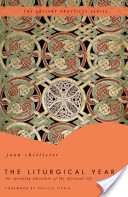
Joan Chittister, “The Liturgical Year”

This past year (liturgical year, that is) I (Stacey Gleddiesmith – SG) have been walking through the Christian seasons with Ian Walden (IW) and Andrea Tisher (AT) – and we have all been walking with Joan Chittister, as we read through her book The Liturgical Year. For the conclusion of this series, I posed a number of questions to Ian, Andrea, and myself about the experience of walking very intentionally through the liturgical calendar this year. I know that some of you have been tracking with us throughout the year – even reading with us. We would love to hear your own answers to some of these questions – so comment away!

  • Is there one moment or event that stands out to you when you think back on walking through the church calendar/liturgical year with Joan Chittister?
    • IW: Advent, particularly the early stages, which bind up all our tiredness from months of following an invisible Jesus in ordinary time, and restore our hopes by uniting them with Israel’s. Joan confirmed Advent as my favourite time of the year, especially by highlighting that it is… the “beginning” of our year. We start by placing the “end” of Israel’s hopes (and ours), the coming of Jesus, right smack in front of our eyes. It sets a very different tone for the year than “New Year” party loneliness, excess, and regret!
    • SG The memory that crystalizes this past liturgical year for me is singing “Christ the Lord Is Risen Today!” and “He Arose” for weeks, rather than one single, solitary time on Easter morning…. Being able to let loose and celebrate fully (and at length) the resurrection of Christ (and therefore our resurrection to come) gave me hope and strength during a dark time in my life. It was an unexpected blessing.
    • AT: For me… Advent was the most memorable because it was also my first Advent in First Baptist Church (Vancouver) and so I was exploring both what Advent means, and what it means to this community, and how we might engage more deeply in the season… Looking back, I’m excited about how we learned to dig deep – and looking forward, I’m excited to do it again and with a little more awareness of who we are as a church and with a little more confidence that they trust me to lead them in new ways of doing things.
  • What did you find difficult about following the liturgical year?
    • AT: … Practically, it is really hard to live the story during Holy Week, when on the Wednesday night, you gather to rehearse all of the resurrection songs for Sunday morning. It’s a bit like skipping through scenes of a movie and then watching them in the wrong order and trying to stay “in” the story… it is a challenge for me on a personal level, but also on a pastoral level as I lead the 60+ musicians involved through that kind of week. I don’t want any of us to miss out on the week, but I also want us to be prepared.
    • IW: My own lack of preparation. Most events (the beginning of Lent, and even Easter day) caught me unawares, despite this advance reading and anticipation with Joan Chittister. By the time I’d realised the significance of the day, it had already passed, and I wasted the season in regret and never-really-getting-started.
    • SG: Being a worship leader, I need to plan for the next liturgical moment while I am both in the midst of the current moment and evaluating the previous moment. It is exhausting to walk this line… and it has caused me to think significantly my planning process (I’m going to try to write a basic plan for the coming liturgical year over the summer). At the same time, this blurring of lines enabled me to not only see, but experience, the connections between the liturgical seasons in a new way. Connect to the accompanying blog post.
  • What practice(s) will you take with you into the following year?
    • SG: Honestly, I don’t think we, as a church, will celebrate every little day and season… We will, however, preserve the seasons of fasting (Advent and Lent) and try to hold back on celebration, taking time to really prepare for it. We will also hang on to the extended seasons of celebration. Now that I’ve experienced an “extended Christmas” and an “extended Easter” I’m not sure I can go back to a one day “pull-out-all-the-stops” kind of celebration…
    • IW: Fasting / conscious preparation in both Advent and Lent (and figuring out the nature of those fasts, and making practical preparations for them [like clearing out the fridge] a week in advance). A “big” Easter (featuring, at least, communal worship times and personal reflections spanning Thursday, Friday, and Saturday, as well as Sunday)
    • AT: The main practice I’d like to take with me is one of “liturgical awareness” that is contagious… I found Chittister to be so inviting… Her descriptions of seasons and practices have such a winsome and attractive way about them… If I could live the seasons a little more the way Chittister describes them, perhaps there would be less need to convince anyone that participation and awareness of the seasons is a good idea.
  • Having walked intentionally through the liturgical calendar, how would you describe its meaning and purpose in the life of the church?
    • IW: It is a continual reminder of our purpose beyond this life. It insists that our lives aren’t just week-by-week, year-by-year survival, but they are witnesses and pioneers of a transposed life, of years after years that will one day (a day that starts now) be lived in a different, higher “key.”
    • AT: The liturgical calendar ensures that the church celebrates the WHOLE story. We don’t spend a whole year in lament or celebration, but follow the cycles which will allow for them both in the context of a story that is central to who we are. The calendar means that Jesus will have to be the focus for much of the year, which hopefully would be true anyway, but it also means that we’ll have to explore some of the less “popular” aspects of His life and ministry – including the idea that we are waiting for him still (Advent) – and to walk a little more slowly through the “death and resurrection” part of the story (Holy Week).
    • SG: After this past year, I understand what Chittister says near the beginning of her book. The slow, cyclical, plod through the life of Christ and the life of the church through the Spirit works as a spiral calling us ever deeper into the life of God. Humanity is designed for repetition. We need to hear the big story over and over – and the liturgical year is a great tool to guide a congregation through and into this meaningful repetition.
  • What would be the value of introducing some of these practices to the “non-liturgical” church, and how would you go about introducing them?
    • SG: The liturgical year is a key way in which you can work to deepen the spiritual life of your congregation. You don’t need all the bells and smells, but I would encourage “non-liturgical” churches to consider how they can rehearse the story: drawing on the liturgical traditions – but reapplying them in a way that suits the personality and character of their specific congregation.
    • IW: Church unity. However much we may disagree about doctrine, it’s harder to distrust and despise one another when we’re all consciously participating in the same acts at the same time. It gives us something in common we can talk about, for starters! Most “non-liturgical” churches plan preaching series in advance and cherish scripture, and so I would start there, consciously aiming to start a new series on the first Sunday of Advent, on Epiphany, in Lent, in Eastertide, and in Ordinary Time…
    • AT: I’m not really in a completely “non-liturgical” setting, so I think for me, it’s about adding strength and depth to our current practices and possibly adding to some of the seasons/days that we tend to treat more lightly. This next year, I’d like us to engage more in Eastertide, with a sense of heading towards Ascension and Pentecost…. I’m also thinking about ways that we might engage in a day like All Saints. Some of my key volunteers have been thinking with me about some creative ways to engage the day, but in a manner that will be more familiar…
  • How did the experience of walking intentionally through the liturgical calendar impact you personally?
    • AT: I found it very special to walk through the seasons thoughtfully and reflectively WITH you two. And my thinking and reflecting with you spilled over into other conversations and relationships too. I think it helped me feel more of a communal engagement. And the beauty of it is the way that the events of our lives match or completely miss-match the season. It means that sometimes we’re in a depression on Easter Sunday. And that’s okay. Or sometimes we’re in the euphoria of relational bliss during Lent. Or we’re experiencing some other life situation that feels “liturgically inappropriate”… as we gather week by week, there are those in our midst who are full of joy, anger, happiness, despair, excitement, anxiety … and so the calendar helps us to engage the whole gamut of human experience. (A bit like the Psalms, really!)
    • SG: Walking intentionally through the liturgical calendar in the company of Joan Chittister, Ian Walden, and Andrea Tischer gave me a fresh understanding of Jesus. The slow intentional plod of the liturgical year, and its focus on Christ, made me feel that I was matching my footprints (along with the others journeying with me) to Jesus’ footprints in the dust.  Stories I have heard all my life, accounts of Christ’s life that I have read almost yearly, came alive in a new way as I tried to walk my congregation through them… the liturgical year awakened in me a desire to measure my life in a new way.
    • IW: It convicted me! Mostly of how I live for deadlines, not for eternity. I time my life by accomplishments, not seasons, or character growth. This year re-awakened me to the scale of transformation I want to see in my life and goals. I don’t want to forget the height of purpose and depth of character that the various seasons call us to. I want my to-do list constantly reduced, effectively, to “walk with Jesus.”

Another Book for the List: “Broken Hallelujahs: Why Popular Music Matters to Those Seeking God”

Can someone please tell me why I am just now hearing about Broken Hallelujahs: Why Popular Music Matters to Those Seeking God by Christian Scharen?

This is a topic I have intended to rant about for some time: the mistaken (in my opinion) belief that Christians should shun secular music because it speaks of things “not of God.” It sounds as if Scharen has already ranted to great effect, arguing that we fail to hear the cry of the world when we ignore its music.

I have now officially added this book to my reading list, and hope to get my hands on it relatively soon. In the meantime, however, I refer you to this excellent review: http://www.patheos.com/blogs/jesuscreed/2012/06/09/saturday-book-review-christian-scharen/

Rant 3: No I don’t Want to Take the “I” out of Worship

A common complaint about recent worship music is that there is far too much focus on the first person (on the individual), and not enough focus on God, or on the community in which we worship. Strangely, the “proof” offered to support the perception of this as a “problem” is generally the number of worship songs that use the first person singuar in their lyrics. I actually think this complaint is, more often than not, both misdirected and misinformed.

Do I think we need songs that focus on who God is and what he’s done. Of course I do. That’s why we have so many of them.

Do I think we need more worship songs that use the first person plural to describe our communal relationship with Christ, as his gathered body? Absolutely. Please go write some right now.

Do I think that the majority of “contemporary worship songs” are self-centered because they use the first person singular? Nope. I think that’s a load of “something.” And here’s why:

I was taught, rightly I think, that I could have a personal relationship with Christ. As far as I know, the only way to express a personal relationship with Christ in worship is to use the first and second person singular in concert. So what makes us assume that singing in this way is selfish?  That’s reason one.

When we sing “I” as a congregation, the “I” gets twisted into a “we” anyways. It’s simple semantics. A group of individuals singing in unison is just that: a group. Singing “I” in unison, in the context of a worship service, is actually an amazing statement of unity that does not subsume the individual, but honours diversity. That’s reason two.

Guess what? The vast majority of Psalms use the first person singular. Should we throw them out, do you think? This is not a contemporary phenomenon. There is no era of Christian (or Hebrew!) music that did not use the first person singular. That’s reason three.

Now, I understand that we live in an individualistic society, and that therefore the church (especially in North America and Europe) must fight against the tendency to promote an individualistic faith. We are not to stand alone. We are to live, and move, and breathe within the community of faith that is, unified, the body of Christ. But I don’t think changing all the “I’s” to “we’s” is how we fight individualism (after all, as I already said, a group of “I’s” necessarily form a “we”).

With our use of pronouns in worship, as in so many aspects of the Christian faith, we walk a fine line. We do not want to be individualistic and lose the strength of community (as we fill in for each other’s weaknesses and compound each other’s strengths). We also, however, do not want to lose our individual strengths in a giant melting-pot body in which a hand can do as well as a toe when one is trying to balance on a high wire. To live that way would simply not be functional. Neither do we want to be a faith of mindless drones that act, move, dress, and speak in exactly the same way. To live that way would be to utterly fail to reach a diverse world.

In conclusion… please stop asking me if I don’t think there are far too many worship songs these days that speak of “I” rather than of “we.” I don’t think that. Not in the slightest.

Happy Pentecost!

This Sunday is Pentecost Sunday. Andrew is preaching on “The Road to Emmaus” rather than on Pentecost this week (finishing up his series on “Eating With Jesus,” check it out at BACC). Since the road to Emmaus is all about the revelation of Christ in and through us, I thought it would be appropriate to use “Spirit of Faith, Come Down,” a hymn written by Charles Wesley, for our call to worship and our benediction. 
 
We’ll read the first two verses as our call to worship, while we light multiple candles on our table – to symbolize the tongues of flame that descended upon the disciples. The final two verses will be our benediction.
 

Spirit of Faith, Come Down

Text: Charles Wesley, 1707-1788
Music: Sacred Harp
Tune: BEALOTH, Meter: SMD


1.  Spirit of faith, come down,

reveal the things of God,

and make to us the Godhead known,

and witness with the blood.

‘Tis thine the blood to apply

and give us eyes to see,

who did for every sinner die

hath surely died for me.

2. No one can truly say

that Jesus is the Lord,

unless thou take the veil away

and breathe the living Word.

Then, only then, we feel

our interest in his blood,

and cry with joy unspeakable,

“Thou art my Lord, my God!”

3.  O that the world might know

the all atoning Lamb!

Spirit of faith, descend and show

the virtue of his name;

the grace which all may find,

the saving power, impart,

and testify to humankind,

and speak in every heart.

4. Inspire the living faith

(which whosoe’er receive,

the witness in themselves they have

and consciously believe),

the faith that conquers all,

and doth the mountain move,

and saves whoe’er on Jesus call,

and perfects them in love.

Worship: Hit Single or Concept Album

I came across an article yesterday that I thought was noteworthy: http://www.relevantmagazine.com/god/worship/features/29251-why-worship-should-be-risky

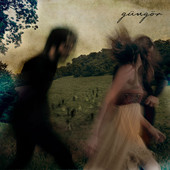
In this article Michael Gungor discusses the nature of the music industry, stating that the majority of pop albums are “collections of eight to 15 of the best snippets of musical ideas the artist or label can come up with” as they search for their next big hit. The songs have little or no connection to each other. The exception to this, is the concept album. The album that circles on big idea, or intentionally takes the listener on a journey through each sucessive song.

He then, mentioning his own most recent album, makes the leap to worship:

It would be naive to think our liturgy has not been affected by today’s culture of pop music singles. Our church services can become disconnected from a consistent story. Planning the worship service often becomes about finding the best four or five worship singles that will keep people engaged, and then a sermon is given that is separate from anything done in the service up to that point. It’s all about the hits.

I often find myself describing a worship service as a journey: We begin with people scattered all over the map, depending on what their weeks have held. We gather them together and slowly bring them into the Big Story, guiding them to a unified point at which they are all prepared to hear the small part of the Big Story that will be delivered that morning. Finally, we give them the opportunity to respond to that small part of the story, bless them, and send them out into the Big Story.

I think Michael Gungor is on to something here. Too often in worship we simply pick our “top singles” – or we circle around an idea without actually going anywhere. Maybe it’s time we explored the concept album. What do you think?

At very least, I’m going to check out Ghosts Upon the Earth.

From Slavery to Deliverance: A Storytelling Service

Sometimes we think that music is absolutely necessary for a worship service. This Sunday, however, our musicians (all five of them) were going to be out of town. So I wrote a storytelling service. Because I ended up being here (after all), I did add some very simple a cappella singing – but otherwise this is primarily a spoken word service. Andrew is preaching on Jesus’ last supper with his disciples, and on our celebration of communion – as a part of his sermon series on Eating with Jesus. The service brackets his sermon with the telling of the story of Israel’s deliverance from Egypt. The style of writing is designed for an oral presentation – so keep that in mind as you read. The service is designed for two primary voices (one voice reading the italicised text), but a third could be added to lead the congregational responses.
 
If you wish to use this service in your own church, please contact me first.
 

Slavery

This story begins like countless other stories. A young mother. Frightened. Afraid for her child. Afraid for herself. What makes it different is not her circumstances. Countless mothers have given birth in slavery. Countless mothers have had the pains of childbirth amplified by the knowledge that their child was not their own. Was owned, even at birth. And that the child’s owner could do whatever he or she wanted with that baby – could have it dashed against the rocks. Could have it thrown into the Nile.

“A voice is heard in Ramah, weeping and great mourning, Rachel weeping for her children and refusing to be comforted, because they are no more.”

No, what makes this story different is not her circumstances. Too many, throughout history, and still, have been in the same position. What makes this story different is the promise of God. “I am” he says. “I will.”

“I am the Lord; I will bring you out from under the yoke of the Egyptians, I will deliver you from slavery, I will redeem you with an outstretched arm, I will take you as my people and be your God.”

I am.

I will.

Beginning with this child, hidden by his mother. Beginning with this child, picked up out of the reeds by Pharoah’s daughter, raised as Pharoah’s grandson. A slave, raised as the grandson of the King of Egypt.

His sister, thinking quickly, asks Pharoah’s daughter if she needs a Hebrew woman to nurse the child she has found. She runs to get her mother. And so the child is raised as the grandson of Pharoah, but also as the child of his own mother, as an Israelite—stories and traditions whispered to him, as he nuzzles at his mother’s breast.

Straddling two identities, Moses grows up and begins to notice the plight of his people. He begins to notice what God had already seen. He begins to feel the concern that God is already acting on.

But Moses’s concern turns to anger inside him, building to a crescendo. He turns that anger upon those who raised him. When he sees an Egyptian foreman beating an Israelite slave his anger bursts. And he kills a man.  Maybe he expected to be lauded as a hero by his own people. Instead, they responded with fear.

“Who made you ruler and judge over us? Are you thinking of killing me as you killed the Egyptian?”

News of the murder reaches the ears of Pharoah who, perhaps realizing that this act proclaimed Moses’s loyalty to the enslaved Israelites rather than the ruling house in which he was raised, tries to have Moses killed. Moses flees for his life—into the desert.

Congregational Response: Slavery

Leader: We are all enslaved, like the Israelites—although we may not know it.

People: Free us, Lord.

Leader: We are slaves to ourselves.

People: Free us, Lord.

Leader: We are slaves to sin.

People: Free us, Lord.

Leader: We are slaves to the desires of the world.

People: Free us, Lord.

Leader: We are slaves to our own selfish desires.

People: Free us, Lord.

Leader: We are slaves because we do not seek the freedom that is offered to us—but prefer to dwell in slavery, perceiving it as safety. Teach us to see our bondage and to cry out to you.

People: Free us, Lord! Lord, have mercy!

SING: Lord have mercy, Christ have mercy, Lord have mercy on us.

Calling

So Moses flees. But his mother must have taught him something. When he sees some shepherd girls being harassed as they try to water their sheep, he drives the thugs away, and helps the seven daughters of Midian to water their flock. Not only does this result in a safe haven for Moses in the desert—it results in a wife. Midian gives his oldest daughter, Ziporah, to Moses in marriage.

For a long time, Moses lives as a part of Midian’s family—taking to himself a third identity. A third nationality. Maybe, after a while, he begins to forget his people. He begins to forget their suffering. But God doesn’t forget. I am, he says. I will.

“I am the Lord; I will bring you out from under the yoke of the Egyptians, I will deliver you from slavery, I will redeem you with an outstretched arm, I will take you as my people and be your God.”

One day, while Moses tends his father-in-law’s flocks, he sees a wonder: a bush of fire. The flames shoot up from the ground, but do not consume the bush on which they feed. Moses draws closer. And God says:

Moses!

“I’m here.” Moses answers.

“Do not come any closer, Take off your sandals, for the place where you are standing is holy ground. I am the God of your father, the God of Abraham, the God of Isaac and the God of Jacob.”

Moses hides his face in fear. He has forgotten his family. Lost his identity. But God knows. God knows who Moses is. God knows who he belongs to. And God begins to speak. He speaks of hearing the cries of his people—of his concern for them. Of his desire to bring them to a good, rich, productive land where they can dwell in peace and plenty. And then God says something else.

“So now, go. I am sending you to Pharaoh to bring my people the Israelites out of Egypt.”

Moses thinks to himself: “No way is that going to work out.” He bows his head and, in mock humility he begins to plead with God: “Who am I, God, that you would send me to the Pharoah? That you would ask me to bring the Israelites out of Egypt?”

“Who am I?” He thinks. “A murderer. A man without family. A man without strength or position. A man without words.”

I am, said God. I will.

“I will be with you. And this will be the sign to you that it is I who have sent you: When you have brought the people out of Egypt, you will worship God on this mountain.”

Moses thinks harder. “But what if I go to the Israelites and tell them that the God of their fathers – of Abraham, Isaac, and Jacob—spoke to me, and they ask me your name?”

Are you my God,” he thinks?

I am, says God.

“Tell them,” says God, “that I have watched over Israel. I have seen what is done to them by Egypt, and I have promised to bring you up out of Egypt.”

Silence.

“The elders will listen to you, Moses… here is the plan.” And God tells Moses that he will strike Egypt with his hand. That after God’s display of might, the Pharaoh will beg the Israelites to leave. That the Egyptians will send them away with gifts so that God’s anger will not continue to rain down on them.

Silence.

“I see… but what if they don’t believe me?”

What if you are not I am. What if you will not. What if, what if, what if…

What is that in your hand?

My staff?

Throw it on the ground!

Moses shrugs and does as he is told—and then jumps back in fear as a snake suddenly writhes at his feet.

Pick it up by the tail.

“Really?”

Really.

Cautiously, pulling back his hand in alarm every time that serpentine head weaves closer to him, Moses reaches out and closes his hand around the snake’s tail. His staff is once more in his hand.

This is so that they will believe. Now. Put your hand into your cloak.

Moses hesitates. He doesn’t want a snake in his cloak. Slowly, he reaches his hand in and, when nothing happens, pulls it out again. He jumps and holds his hand away from himself. It’s white with leprosy. If he could run from himself he would.

Now put it back in your cloak.

Put his infected hand inside his cloak—next to his heart? Slowly, staring into the fire, Moses does as he is told. When he pulls his hand out again he sighs in relief. It’s clean.

If they don’t believe the first sign, they may believe the second. If they don’t believe the second, take some water from the Nile and pour it out in the dust. It will turn to blood on the ground.

Silence.

“Sorry. Sorry, Lord… but I’ve never really talked much in front of people. No one has ever called me a leader. I… I’ve already made a lot of mistakes. I’ve always been slow of speech—and you haven’t changed that.”

Moses. Looking for a miracle for himself. If he was to be called by God, then surely God would make him fit for the task by changing him into the very image of eloquence so that he could talk the Israelites and the Egyptians around his little finger.

“Who gave human beings their mouths? Who makes them deaf or mute? Who gives them sight or makes them blind? Is it not I, the Lord? Now go; I will help you speak and will teach you what to say.”

I am. I will. But through you. I will help you. I will teach you—but I will not change you.

Silence.

“Sorry. Sorry, Lord… but couldn’t you send someone else?”

Congregational Response: Calling

Leader: Like Moses, we are called. Like Moses, we are hesitant.

People: Help us, Lord.

Leader: We are frozen by fear.

People: Help us, Lord.

Leader: We see only the difficulties ahead of us.

People: Help us, Lord.

Leader: We see only our faults.

People: Help us, Lord.

Leader: We do not want to go where you send us.

People: Help us, Lord.

Leader: We do not want to speak to those you wish us to speak to.

People: Help us, Lord.

Leader: We are called by you, but we feel unfit, unprepared, and unable to complete the tasks you have set before us. We forget that it is your strength by which we go. That you have promised to be with us. That you have created us. That you knew everything about us before you called.

People: Help us, Lord. Lord, have mercy on us.

SING: Lord have mercy, Christ have mercy, Lord have mercy on us.

A Hurried Meal

Moses goes. All his protests cannot dampen God’s call. He goes. But his brother Aaron performs the signs before the elders of Israel. And the elders fall on their faces and worship God when they hear that he is concerned about them and has heard their cries.

But when Aaron and Moses go to Pharaoh, Pharaoh gets angry. He makes the work of the Israelites harder. The Israelite overseers come to Moses and Aaron in anger, and Moses cries out to God: “Why, Lord, why have you brought trouble on this people? Is this why you sent me? Ever since I went to Pharaoh to speak in your name, he has brought trouble on this people, and you have not rescued your people at all.”

“Now you will see what I will do to Pharaoh: Because of my mighty hand he will let them go; because of my mighty hand he will drive them out of his country.”

I am, God says. I will.

“I am the Lord; I will bring you out from under the yoke of the Egyptians, I will deliver you from slavery, I will redeem you with an outstretched arm, I will take you as my people and be your God.” – Exodus 6:6-7

Moses reports this to the Israelites, but they turn away from him in discouragement. God tells Moses and Aaron to repeat his message to Pharaoh. And they go. And Aaron performs the signs. Pharaoh’s heart, however, is hard. He cannot humble himself. He cannot admit that anyone could have more power than himself. And so, the plagues begin. The river turns to blood, and the people have to dig drinking water out of the river bank. Frogs pour across the land: in kitchens, in beds, in ovens. They die in courtyards and houses and fields—but Pharaoh will not let the Israelites go.

Tell Aaron, ‘Stretch out your staff and strike the dust of the ground,’

And a great swarm of gnats flies up. But Pharaoh won’t listen. So instead of gnats there are flies. On everything. In the eyes of the animals, underfoot. In every house, including the palace. Every place in Egypt was covered, except where the Israelites lived—but still Pharaoh does not yield. And so, Egyptian livestock sicken, while those of the Israelites remain well. And every single Egyptian horse, donkey, camel, cow, sheep, and goat dies—but still Pharaoh resists.

“Take handfuls of soot from a furnace and have Moses toss it into the air in the presence of Pharaoh. It will become fine dust over the whole land of Egypt, and festering boils will break out on people and animals throughout the land.”

And then there is hail, so not only the livestock, but the crops are decimated. And there are locusts that eat every bit of green that remained standing. And Pharaoh’s officials plead with him to let the Israelites go. “Egypt is ruined!” They say. But still Pharaoh’s heart was hard. So God blocks out the sun. But it still isn’t enough.

And so the worst happened. Moses told Pharaoh:

“This is what the Lord says: ‘About midnight I will go throughout Egypt. Every firstborn son in Egypt will die, from the firstborn son of Pharaoh, who sits on the throne, to the firstborn son of the female slave, who is at her hand mill, and all the firstborn of the cattle as well. There will be loud wailing throughout Egypt—worse than there has ever been or ever will be again. But among the Israelites not a dog will bark at any person or animal.’ Then you will know that the Lord makes a distinction between Egypt and Israel. All these officials of yours will come to me, bowing down before me and saying, ‘Go, you and all the people who follow you!’ After that I will leave.”

Then Moses, hot with anger, leaves Pharaoh.

Surely this warning would be enough.

But no.

And so God begins to prepare a meal for his people. They are to take a lamb, one for each household, and roast it over a fire. Smaller households are to share with each other. After each lamb is slaughtered, some of the blood is used to mark the top and the sides of each doorframe in which a lamb is eaten. They are not to leave their houses during the night. They are to eat the roasted meat with bitter herbs and bread made without yeast. None of it is to be left till the morning.

This is how you are to eat it: with your cloak tucked into your belt, your sandals on your feet and your staff in your hand. Eat it in haste; it is the Lord’s Passover.

So they huddle in their houses. Sandals on. Staff in hand. Cramming food into their mouths. Children do not need to be hushed. Adults try to stop themselves from peering around at the doorway in fear. They eat as much as they can fit in their bellies—preparing for a long hungry journey. And they wait.

The blood, God said, was a sign. And the Spirit of God passes by the houses of the Israelites and leaves them unharmed. And they are ready to go when the wailing begins.

It was a day, God said, that Israel would remember forever. It was a meal, God said, that was to be forever repeated. A lasting ordinance. A celebration of God’s great work of deliverance. And blood was the sign.

During the night Pharaoh summoned Moses.

Up! Leave my people, you and the Israelites! Go, worship the Lord as you have requested. Take your flocks and herds, as you have said, and go.”

So the meal did not last until morning after all. And the haste was warranted. The Israelites pack up their bread dough—there is no time to add yeast and let it rise—and they leave Egypt.

Congregational Response: A Hurried Meal

Leader: Like the Israelites, God has prepared a meal for us. Like the Israelites, we learn the meaning of the meal only as we eat it.

People: Feed us, Lord.

Leader: We know now that you have heard our cries.

People: Feed us, Lord.

Leader: We know now that you have been concerned for us.

People: Feed us, Lord.

Leader: We know now that your deliverance is at hand.

People: Feed us, Lord.

Leader: We know now that, although you have delivered us, our journey has just begun. Feed us, that we might have strength to complete our journey. Teach us to understand the meal that you have prepared.

People: Feed us, Lord. Lord, have mercy on us.

SING: Lord have mercy, Christ have mercy, Lord have mercy on us.

*****SERMON*****

Luke 22:7­-20

*****COMMUNION*****

Freedom

And so the Israelites leave. Along with their livestock, their goods, and a considerable amount of gold and silver thrust on them by Egyptians eager to see them go. But even then, Pharaoh pursues them. Realizing they had lost their primary source of free labour, Pharaoh and his army set out after the Israelites. Trapping them against the Red Sea.

The Israelites are terrified. They cry out to Moses: “Was it because there were no graves in Egypt that you brought us to the desert to die? What have you done to us by bringing us out of Egypt? Didn’t we say to you in Egypt, ‘Leave us alone; let us serve the Egyptians’? It would have been better for us to serve the Egyptians than to die in the desert!”

How many more times would they say this? God’s deliverance does not always work the way we think it should.

Then Moses gave perhaps his greatest and most eloquent speech—he had learned something at last:

“Do not be afraid. Stand firm and you will see the deliverance the Lord will bring you today. The Egyptians you see today you will never see again. The Lord will fight for you; you need only to be still.”

Silence.

They had been delivered out of Pharaoh’s hand, but had very recently come to view God’s deliverance as a fragile thing. Slaves for generations, they are still learning to trust that God is with them. I am, God says. I will.

“I am the Lord; I will bring you out from under the yoke of the Egyptians, I will deliver you from slavery, I will redeem you with an outstretched arm, I will take you as my people and be your God.”

The angel of God and the pillar of fire and cloud, which had been guiding the Israelites into the desert, move between Israel and Pharaoh’s army—giving light to one, and only darkness to the other. And so they spend the night. And as the Israelites try to quiet restless animals, and lull their children to sleep, Moses stretches his hand out over the water, and all night long, God drives back the waters of the sea. And, in the morning, the Israelites coax their animals through the sea on dry ground: a wall of water on their left and on their right.

“The Lord is my strength and my defense; he has become my salvation. He is my God, and I will praise him, my father’s God, and I will exalt him.”

Pharaoh’s army is defeated in the sea, and Israel continues on her journey through the desert—toward the promised land. They do not go quietly. They complain the whole way. They do not live happily ever after.

But their story of deliverance echoes through time until, one Passover, a lamb is prepared. A lamb that will bring God’s final deliverance—to all his people. A lamb that is slain, to bring us life. To bring us freedom. Freedom from ourselves, freedom from sin, freedom from the desires of the world. True freedom to grow into people who are eager to answer his calling, and who will obey his voice, strengthened by the meal that God has prepared.

Congregational Benediction

People: Lord, you have freed us from our captivity. You have called us to follow you and to do your work. You have strengthened us with this meal. Teach us to live in the joy of your freedom. Amen.

Gardener God

 Reprinted with permission from Regent College: The Regent World, Spring 2010, Volume 22, Number 2.
 
While I now have a yard and a garden to enjoy (no longer am I limited to four square feet of balcony!), I was reminded of this article as I placed trays of seeds out on my window sills a few weeks ago. I still feel “winterish” in my soul – but there is always the promise of spring.
 

In my prairie farm home, spring always began with foil trays of potting soil lined up on our window sills. When green shoots of tomatoes, marigolds and geraniums began to poke above the surface, I knew that spring thaw couldn’t be too far away.

After last frost, my mother would sit down at the kitchen table and draw a map of the garden. With packets of seed scattered across the table rows of peas, beans, and carrots, plots of zucchini and corn would sprout from her pencil across the page. We would enact her map later that week: unrolling lengths of string and tracing straight rows along them, filling trenches with water, dropping seeds in and covering them over; taking bright green seedlings out of their foil trays and sinking them deep in the soil of flower beds and garden plots.

Perhaps it is because of this family history that I am fascinated by the Genesis 2 description of God as gardener: “Now the LORD God had planted a garden in the east, in Eden; and there he put the man he had formed. And the LORD God made all kinds of trees grow out of the ground—trees that were pleasing to the eye and good for food” (vv. 8-9). The LORD God planted—not spoke into being, but planted—got down on his hands and knees and dropped seeds into trenches in the earth, waited for them to grow.

Not only does God plant a garden, but he plants humanity within that garden (v. 8)—and gives humanity its first task: “to work [the garden] and take care of it” (v. 15). As image-bearers of our gardener God, we are charged with the responsibility of tending the earth.

This is a responsibility I took for granted when I lived on my father’s farm, worked in my mother’s garden. Now that I live in the city, with only a small balcony to connect me to the outdoors, I feel disconnected from the origins of food, experience few consequences of my actions in nature. When my garbage is swept neatly away every week, what does it matter how much of it I produce? When I buy my food in plastic trays and bags at the grocery store, what does it matter if it doesn’t rain? I have become seduced by convenience: throwing out what could be saved; expecting fruits and vegetables to be readily available, regardless of season; accumulating unneeded possessions that gather dust on my shelves before being consigned to some far-removed rubbish heap.

When the prophets pick up on the image of God as gardener, they give it a different twist. Israelis described as a well-watered garden under God’s hand (Nm 24:6-7, Is 58:11, Jer 31:12), or, when in rebellion against God, as a desert or wilderness, untended and unproductive (Is 5:1-7, Is 51:3). Living in cities, removed from the earth that sustains us, we struggle not only to fulfill our task as image-bearers of a gardener God, but also to understand the work of a gardener God in our lives, to understand ourselves as garden: as pruned, weeded, watered, as weathering the seasons.

For four years now, I have felt locked under a blanket of snow, barely surviving through a very long winter. Spring may still be months, or even years, away. The temptation is to despair. Instead, I cling to this image of God as gardener: God drawing out garden rows, in the midst of winter; filling foil trays with potting soil; setting them on the window sill and watching, with me, for the day that green shoots will begin to appear.

In the meantime, in my city apartment, I try to remind myself in as many ways as possible of this gardener God, to remind myself of my image-bearing role as gardener. I grow tomatoes, chives, rosemary and thyme on my balcony, and alfalfa and bean sprouts on my kitchen counter. I sort my garbage and haul recycling and compost inconveniently to recycling sites in the city. And, every year, before the last frost has left the ground—while it is still winter—I plant seeds in foil trays and set them out on my window sills.

Now Taking Questions

There is no point in my “rabbiting on” (as my husband would say) about things you care nothing about. Therefore, I would like to start a Q&A series in which I, and others (I won’t claim omniscience for myself), research and answer questions you have about worship (theology, practicalities, ethics, relationships, church, liturgy, music… you name it). So bring on the questions!

Please also consider sharing this post with others who might have questions in this area: those who lead worship at your church, your pastor, a friend who is interested in plumbing the depth of such things. The more questions I get, and the more conversation partners we have, the better this series will be.

Leave your questions in the comment box, and if you want to throw in a few suggestions for other things you’d like to see on this blog, I’ll take those now as well.