Gardener God

 Reprinted with permission from Regent College: The Regent World, Spring 2010, Volume 22, Number 2.
 
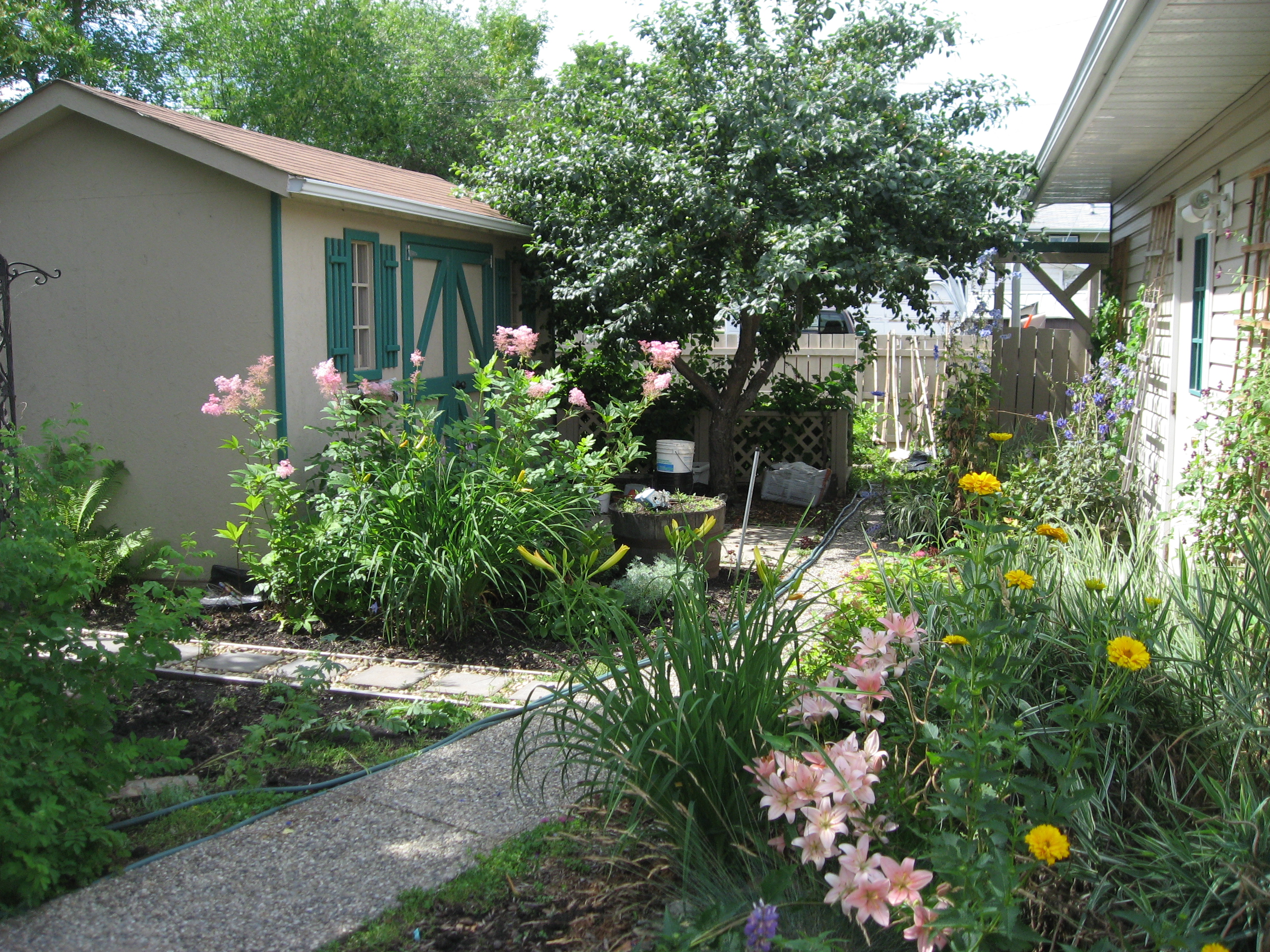
While I now have a yard and a garden to enjoy (no longer am I limited to four square feet of balcony!), I was reminded of this article as I placed trays of seeds out on my window sills a few weeks ago. I still feel “winterish” in my soul – but there is always the promise of spring.
 

In my prairie farm home, spring always began with foil trays of potting soil lined up on our window sills. When green shoots of tomatoes, marigolds and geraniums began to poke above the surface, I knew that spring thaw couldn’t be too far away.

After last frost, my mother would sit down at the kitchen table and draw a map of the garden. With packets of seed scattered across the table rows of peas, beans, and carrots, plots of zucchini and corn would sprout from her pencil across the page. We would enact her map later that week: unrolling lengths of string and tracing straight rows along them, filling trenches with water, dropping seeds in and covering them over; taking bright green seedlings out of their foil trays and sinking them deep in the soil of flower beds and garden plots.

Perhaps it is because of this family history that I am fascinated by the Genesis 2 description of God as gardener: “Now the LORD God had planted a garden in the east, in Eden; and there he put the man he had formed. And the LORD God made all kinds of trees grow out of the ground—trees that were pleasing to the eye and good for food” (vv. 8-9). The LORD God planted—not spoke into being, but planted—got down on his hands and knees and dropped seeds into trenches in the earth, waited for them to grow.

Not only does God plant a garden, but he plants humanity within that garden (v. 8)—and gives humanity its first task: “to work [the garden] and take care of it” (v. 15). As image-bearers of our gardener God, we are charged with the responsibility of tending the earth.

This is a responsibility I took for granted when I lived on my father’s farm, worked in my mother’s garden. Now that I live in the city, with only a small balcony to connect me to the outdoors, I feel disconnected from the origins of food, experience few consequences of my actions in nature. When my garbage is swept neatly away every week, what does it matter how much of it I produce? When I buy my food in plastic trays and bags at the grocery store, what does it matter if it doesn’t rain? I have become seduced by convenience: throwing out what could be saved; expecting fruits and vegetables to be readily available, regardless of season; accumulating unneeded possessions that gather dust on my shelves before being consigned to some far-removed rubbish heap.

When the prophets pick up on the image of God as gardener, they give it a different twist. Israelis described as a well-watered garden under God’s hand (Nm 24:6-7, Is 58:11, Jer 31:12), or, when in rebellion against God, as a desert or wilderness, untended and unproductive (Is 5:1-7, Is 51:3). Living in cities, removed from the earth that sustains us, we struggle not only to fulfill our task as image-bearers of a gardener God, but also to understand the work of a gardener God in our lives, to understand ourselves as garden: as pruned, weeded, watered, as weathering the seasons.

For four years now, I have felt locked under a blanket of snow, barely surviving through a very long winter. Spring may still be months, or even years, away. The temptation is to despair. Instead, I cling to this image of God as gardener: God drawing out garden rows, in the midst of winter; filling foil trays with potting soil; setting them on the window sill and watching, with me, for the day that green shoots will begin to appear.

In the meantime, in my city apartment, I try to remind myself in as many ways as possible of this gardener God, to remind myself of my image-bearing role as gardener. I grow tomatoes, chives, rosemary and thyme on my balcony, and alfalfa and bean sprouts on my kitchen counter. I sort my garbage and haul recycling and compost inconveniently to recycling sites in the city. And, every year, before the last frost has left the ground—while it is still winter—I plant seeds in foil trays and set them out on my window sills.


Now Taking Questions

There is no point in my “rabbiting on” (as my husband would say) about things you care nothing about. Therefore, I would like to start a Q&A series in which I, and others (I won’t claim omniscience for myself), research and answer questions you have about worship (theology, practicalities, ethics, relationships, church, liturgy, music… you name it). So bring on the questions!

Please also consider sharing this post with others who might have questions in this area: those who lead worship at your church, your pastor, a friend who is interested in plumbing the depth of such things. The more questions I get, and the more conversation partners we have, the better this series will be.

Leave your questions in the comment box, and if you want to throw in a few suggestions for other things you’d like to see on this blog, I’ll take those now as well.

Easter Sunday: Chapter 25 of Joan Chittister’s ‘The Liturgical Year’

by Ian Walden

“This is the very center of the church. This, not the birth of a baby, is the reason we celebrate Christmas. This is the reason for all the feasts of the church. This is the place from which we all draw our fire.”

And what is this Easter-birthing ‘fire’? A tomb-seal shattered (from the inside?). Mighty strength, and glorious possibility – for one we thought Failure, God-Forsaken, for whom all hope had died. A human being, just like us (!) who was kindled to blaze down Death’s dark door, and claw back a Whole New Life beyond our dreams. And all this from One who had given comprehensive proof of His love for us all. So maybe, just maybe, this new way could be for us, too. “We are not, we know now with stunning awareness, made for this world alone. There is more to us than this. Life is about more than simply surviving … We are here to grow to full spiritual stature … we too, must now become part of the Light ourselves.”

This is, as Chittister puts it, “the feast of Resurrection, of the redemption of life from the abyss of nothingness to the pinnacle of creation.” The good news is about far more than a cross, a sacrifice, and forgiveness. That’s all huge, but it’s just the beginning. Now, from Sunday on, there’s a new Life to be lived, a new Alleluia to be yelled, a new Creation to invent. Because the night of this world’s decay is far gone, and the Day is at hand. We have already seen its dawn, and that Dawn now lives within us.”We have come again to answer the question that comes out of Holy Saturday’s emptiness: no, we are not alone.” And to the Light of the World, we are no longer servants, but partners. Who can tell what we might do on Monday?

The journey from Saturday’s silence and emptiness into celebration of this great New Beginning is, in Chittister’s experience, a four-part affair. It begins Saturday night, with the “striking of new fire,” whereby the candles of everyone assembled are lit from the one Paschal candle. Then the history of creation and salvation is told from Scripture, and the congregation shows their appreciation for God’s saving by repeating their baptismal vows, committing again to “try again to be what we are called to be.” Thus prepared, these new-day people cement all by sharing the great Feast of unity, of communion with the risen Christ and with each other.

This is all a lot longer and more involved than I’m used to. What does it all add? What ways of rejoicing have helped drill hope deep into you and your church? What do we miss by disconnecting Sunday from Saturday from Friday, as we so often do?

Holy Saturday – Facing the Darkness: Chapter 24 of Joan Chittister’s “The Liturgical Year”

Holy Saturday is one of the least observed days in the liturgical year – mostly because nothing happens. “There are no public ceremonies, no particular liturgies to interrupt the sense of waiting and vacuity that mark the day” (p. 152). It’s a day for growing – an activity we don’t usually take the time to notice, or consciously engage in. “Holy Saturday faith” says Joan Chittister, “is not about counting our blessings; it is about dealing with darkness and growing in hope” (p. 153).

Once again, I find that I cannot engage with the liturgical year, or write about it, without delving into the personal. How can I speak about facing the darkness unless I’m willing to bring my own darkness into the light? So let me tell you first that the surgery I had three weeks ago (for severe endometriosis) was unsuccessful, and now we wait – again – this time to see if funding goes through for me to travel to Oregon for another surgery (which may or may not be successful). There is a very real chance that my husband and I will never be able to have kids.

So when Chittister says “Someday we will all know the power of overwhelming loss when life as we know it changes, when all hope dies in midflight” (p. 153) – I know what she’s talking about. This Holy Saturday I will wait in the darkness, cradling a broken womb.

You see, Holy Saturday places us in the position of the disciples, who watched as their dreams were strung up on a cross – and buried. “No doubt about it: this is the day of going down into the tomb – our own as well as Jesus’” (p. 155). This is the day that all the dreams that have died, and all the losses we have experienced, rise to the surface and shake our faith.

But, as Chittister says, it is also a day for “growing in hope.”  “The important thing about Easter Saturday” she says, “is that it is precisely when its emptiness sets in that we begin to understand there is as much voice of God in emptiness as there is in anticipation. It is now, when we feel the absence of Jesus most keenly, that we can find ourselves listening to Him most intensely” (p. 155).

Now, more than any other time in my life, I find myself in constant dialogue with God. I always thought that a “life of prayer” was a complicated and difficult thing reserved for the spiritual greats among us, but this constant internal voice calling “help, help, help” is effortless. When a friend asked me what my relationship with God looks like in the midst of everything, I found myself using a somewhat cheesy, but very apt image. I’m like a tree in a wind storm. I can feel my branches whipping around my head – and I can feel myself bending (sometimes it’s almost unbearably painful) – but I know that I won’t be uprooted. And I know that the storm will eventually pass.

And that’s what hope is. It’s not being miraculously lifted out of your circumstances – it’s knowing you can get through them. It’s knowing that God’s faithfulness is not shaken by circumstance. That the all-powerful God of everything is willing to sit with you in the silence of a tomb. “There is hope that we can begin, finally, to see the world as God sees the world and so trust that God is indeed everywhere in everything at all times – in the abstruse as well as the luminous, whether we ourselves can see the hand of God in this moment or not. To be able to come to that point before the beginning of the Easter Vigil, before the cantor sings the Exultet into the darkness, is what Holy Saturday is really all about. Then loss is gain, and silence is a very clear message from God” (p. 157, emphasis mine).

How have you experienced God’s presence in the darkness?

The Weight of Good Friday: Chapter 23 of Joan Chittister’s “The Liturgical Year”

by Stacey Gleddiesmith

Good Friday.

The day when hope falters and darkness seems to triumph.

Joan Chittister describes the pain of second-century Israel: “the grief was still raw. After all, they were still waiting for His return, then and there. And in the midst of the wait, the desolation inspired a fast that tapped into the profound heartache of a people. For years, the Christian community fasted not only on Good Friday but on Holy Saturday as well…. For years, the fast was a complete one. Early Christians took no food or water at all. They fasted for forty straight hours without either eating or drinking” (p. 148).

Now, she says, Good Friday gatherings are often mere pageantry:  “something to watch, something to realize with a pang… But nothing really serious” (p. 151).

So how do we push past our momentary sympathy with Christ, and take up our cross to follow him? How do we inspire our congregations to do so? How do we preach crucifixion to a culture that shrinks from unpleasantness?

We can use darkness and silence. We can bring newness to history through creative tellings. We can hold back the celebration and take time to sit in the dark. To wait. We can add weight to our words, laying the burden of Christ, for once, heavily on the shoulders of our congregation. Allowing ourselves to feel our backs bowed and our knees trembling – Friday, Saturday.

More than that, we can fast. Having read this chapter, I feel a fresh urgency to observe Good Friday by taking in nothing but the death of Christ. I need the gnawing in my belly that will, in Chittister’s words “whet the need for the return of Jesus to our own lives.” The fast of Good Friday, she says, “means to concentrate us on the moment, to be there nagging at us in the midst of our distractions, to keep us keenly aware of what the spiritual life is meant to be about” (p. 151). I need that. Desperately.

So I invite you to fast with me. Or, if not to fast, to solemnize this day in another way. I invite you to share, here, your experience of Good Friday – the weight that was laid upon you – that we may fully experience together the lightening of Easter morning.

Good Friday: From Light to Darkness – a Liturgy

Call to Worship: Today we walk with Jesus to Golgotha. We remember the pain that he suffered. We remember the triumph of his death – that didn’t look much like triumph to anyone. And today we remember what it really means to say we are “taking up our cross” and “following Jesus.”

We are going to move together, as we did during Lent, through the words Jesus spoke as he hung on the cross – and we are going to move together through the last hours of Jesus, and with him into the tomb. As we move through each phrase that Jesus spoke from the cross, we will blow out one of our Lenten candles – and we will have a short time of silence. After the seventh word, I will ask you all to blow out your candles, and we will share a longer moment of silence in relative darkness.

Come, let us worship together.

*Opening Song: O The Deep, Deep Love of Jesus – vs 1, 2, 3

Reader 1: Jesus we come – to walk the road with you – to follow you to the cross. We prepare ourselves now to follow your footprints in the dust. To understand how you died. To understand how we die. To understand how you lived. To understand how we should live.

Reader 2: John 18:28-19:18


Reader 3: Luke 23:32-34

Reader 1: You forgave even those who took your hands and feet and drove nails into solid wood. Who, straining, lifted up the cross that held you and dropped it into place. You have forgiven them. When we ask for mercy, we are amazed to find that it has already been extended. You have forgiven us.

1st Candle blown out – short Silence

*Congregational Response: What Wondrous Love Is This – vs1, vs2


Reader 3: Luke 23:35-43

Reader 1: In your darkest hour, you turned to reassure the man beside you – a stranger. You extended eternity to him, even as you died. When we suffer, we find your hand extended to us – we find strength in the life you give us.

2nd Candle blown out – short Silence

*Congregational Response: O Sacred Head Now Wounded – vs. 1, 2


Reader 2: John 19:19-24

Reader 3: John 19:25-27

Reader 1: You turned, in your suffering, to care for those who cared for you. You turned those you loved toward each other, and asked them to give each other the status of family. You have called us your sisters, your brothers.

3rd Candle blown out – short Silence

*Congregational Response: O Sacred Head Now Wounded – vs. 3


Reader 3: John 19:28-29

Reader 1: You were fully human – thirsty as you hung there, in the hot sun. You felt the urgent need of a parched throat and a dry tongue. You have quenched our thirst with your living water.

4th Candle blown out – short Silence

*Congregational Response: You Are My King – vs, ch, vs


Reader 3: Mark 15:33-34

Reader 1: You were abandoned by God, alone in your suffering. You withstood what we could not, and promised to never leave or forsake us.

5th Candle blown out – short Silence

*Congregational Response: How Deep the Father’s Love For Us – vs1


Reader 3: John 19:30

Reader 1: You finished the work you came into the world to complete, at great cost to yourself. At great cost to yourself, you completed, and will complete, the world in which you came to work. At great cost you have completed and will complete your work in us.

6th Candle blown out – short Silence

*Congregational Response: How Deep the Father’s Love For Us – vs2, 3


Reader 3: Luke 23: 44-46

Reader 1: After all. After everything. After the pain, the rejection, the sorrow – you entrusted your spirit to your heavenly father. Although you felt the forsakenness of sin in its fullest, you trusted your father. Now you entrust us to your heavenly Father – sitting at his right hand, and interceding for us. The curtain was torn, our separation from God is ended – in this moment. May we trust. May we learn, in the darkness, the extent of your faithfulness. May we entrust ourselves to you.

In a moment, as I blow out the seventh candle, I will ask you, also, to extinguish the light on your table. We will take a moment together to grieve, and to feel the weight of Christ’s sacrifice, of the Father’s sacrifice. As we sit in silence, and as we sit in the dark, we will also fill our hearts with stillness, as we seek to understand the cross – and as we seek to take up our own cross.

Lord Jesus, we ask that you would teach us to understand this great and terrible mystery. Please accept now our silent worship.

7th Candle blown out – Long Silence

*Congregational Response: Beneath the Cross of Jesus – vs1, 2, 1

Reader 2: John 19:31-42

Benediction: And so we wait. Through the night, through the long, silent Saturday in the tomb. The battle is already won. Jesus has already declared his work finished – but we wait. We wait for the glimmer of dawn in the darkness. For the sliver of hope that lightens despair. We wait for the empty tomb. We wait for Christ to return.

In a moment, we are going to share a meal together. Communion, as it was first celebrated, was the sharing of a meal. Jesus did not sit with his disciples the night of his betrayal and offer them only a bite of bread and a sip of wine – he sat with them around a table that contained a feast. Take a moment before you eat, to bow your head and remember. As you eat this food that many hands have prepared, hold in the back of your mind the words of Christ: “Take and eat. This is my body.” And as you drink, hold in the back of your mind the words of Christ: “This is my blood of the covenant, which is poured out for many for the forgiveness of sins.”

And as you wait, as you eat and drink, may the darkness of waiting make the light shine brighter. May the pain you experience intensify your joy. And may your night, gradually, gloriously, give way to morning.

Amen.

Holy Thursday: Chapter 22 of Joan Chittister’s ‘The Liturgical Year’

by Ian Walden

“Holy Thursday is, indeed, a study in mixed emotions.”

Today, we disparate disciples will enjoy Communion like no other – but by night’s end we’ll be scattered, each to our own fears. Today, we see the beginning of a new Eucharistic world – and hear the clank of soldiers’ boots on the garden path. Today, we get our feet washed, and see in Jesus’ servanthood a new vision of authority, one that will nourish and cultivate rather than dominate – only to have our beloved leader taken from us. Today, we are intimate with the recently-hailed King of God’s people – but still have little idea where he is going, why he is going there, or what he expects from us in his absence. Today, we get closer to Jesus than ever before – and realise how prone we are to betray or abandon him when he leads us toward any kind of danger.

This is, as Chittister insists, a threshold – both for Jesus and for us – between life and death, between community and life as they should be, and how they/we still are. It is hard to know how to feel. It is hard to truly rejoice and truly lament. (It’s a relief to admit this; I’ve always found it makes for an emotionally frantic week.)

This is also Jesus’ time to give injunctions; nice, clear ones. “Do this in remembrance of me.” “I have set you an example, that you also should do as I have done to you.” If ever there was a time for conversion, for a new kind of living, this is it. And since we’re not anywhere close to obeying these injunctions yet, it’s a time for pondering that gap, and for raising pleas to heaven that grace will enable us to change anew.

All of this is good reason, then, to end our Thursday services in silence – a silence that will last a further 48 hours. A fast for eyes and ears; a chance for hearts to ponder, to catch up. And boy is there a lot of catching up to do … Any ideas how this liturgical silence can be carried into Friday and Saturday for those of us not in monastic orders??

Holy Week: Chapters 20 & 21 of Joan Chittister’s ‘The Liturgical Year’

by Andrea Tisher

Holy Week is here. Now. We’re in it. Already.

Jesus has entered the city of peace. He has been sung to, lauded, waved at with greenery. He has wept over the misunderstanding of who He is.

And now there’s really not much left to do, except to stay mindful of the events of the rest of the week. Maundy Thursday, Good Friday, Holy Saturday, and Easter Sunday.

Chittister rightly warns of the intensity of the drama that unfolds during this week.

Her opening comments are helpful, and I’ll return to them.

But first, I must quibble with Chittister. Which I really hate to do. She’s been such a lovely conversation partner and guide. But here, in what could be argued is the most important week, she drops the ball. Vague references to the opening liturgies of Holy Monday-Wednesday. Holy what? And then a whole chapter on the ways days of the week were measured and other assorted mundane topics. I’m trusting that as she leads us through the days of the Triduum (Maundy Thursday, Good Friday, Holy Saturday) that she’ll regain her footing in offering us ways to view these days and doorways into meaningful participation. But these overview chapters left me a little disappointed.

Back to her opening comments, as I think that’s where there are some gems…

Of Palm/Passion Sunday: “It reminds us that at the moment of what seems to be the height of Jesus’ public acceptance aslo begins the process of His public betrayal, His public failure, His public abandonment.”(130)

And of the week in general: “Why must this happen? What is all this suffering about? But deep down inside of us, we already know what the life of Jesus and these first days of Holy Week confirm: there are some things worth living for, even if we find ourselves having to die for them as well.” (130-131)