
Adult Afresh: Lenten Asceticism in Chapter 16 of Joan Chittister’s ‘The Liturgical Year’

by Ian Walden

As we’ve already noticed, Christmas easily becomes a child-centric  celebration. Not so Lent! What kid can easily be induced to forgo getting things for six whole weeks, let alone take up a practice like giving their precious treasures away? In her recollections of childhood lent exercises, Chittister states starkly that this “was about spirituality become adult.” Whether we are young or old, Lent is remorseless in posing one central question to us all: “If life is not about permanent and continual self-satisfaction, what is it about?” Indeed.

But as she has already intimated in chapter 15, Lent is also a voice calling us to live newly (no matter what our life has been like until now), to live fully, to live in the hope and light of promised mercy, guaranteed new life. In other words, Lent is supposed to be a gift to us of all the fresh-faced, open-skied, hopeful-futured possibility of youth. Even to us jaded ‘adults’.

So how is this rejuvenation to be achieved? According to Chittister, Lent is “our salvation from the depths of nothingness. It is our guide to the more of life.” The ascetic discipline it proffers is to “concentrate the soul, viselike, on the center of life rather than on its peripherals.” It is “the gift of self-conquest.” It seems that Lenten self-denial is about replacing the triviality in our lives with purpose, filling our inner emptiness with a new fullness, and substituting freedom in place of our slavery and addiction to various sins.

Lent’s renunciation, then, requires courage from us in order that it may work its magic. Courage, to acknowledge that life is too short and too fragile to be wasted the way I’ve been wasting it (hence the mortality-reminder on Ash Wednesday). Courage, to admit that too much of what I fill my life with is just a papering over of my inner emptiness, of a heart forgetful of grace, of calling, of missional purpose. Courage, to admit that I still need salvation from my home-made crutches and addictions and mis-placed priorities.
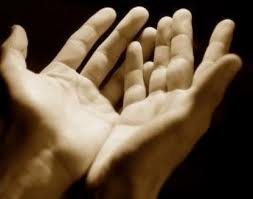
In return, the very practice of renunciation instils us with many gifts. In it we find faith, the daring to believe anew that I need less than I think of creation’s good things, because I am in fact the Creator’s friend. And hope, hope that by God’s mighty immanent grace, today can still be that better day, the day of Kingdom Come – and so I need not pin my hopes for ‘a better life’ on the next indulgence, the next vacation, the next tv programme or bit of human recognition. Asceticism, in short, is a form of training, training to say ‘no’ to my small-god-self, to depose myself in order to make way for others, for Another. It frees me from my tiny wisdom, my limited will. It frees my gifts to benefit more than just me. It frees and clears my consciousness for the very ‘contemplation’ that Ordinary Time calls me to (see chapter 15).

In Lent, it seems, it turns out that the true children (the hopeful, the liberated) are those who have ‘grown up’ via renunciation. How true does this picture of Lent ring for you? What practices have helped you ‘grow up’ in these ways in Lent seasons past? What kind of helps have enabled you to persist in the face of much temptation?


The Seven Last Words of Christ: Readings for Lent

First Sunday of Lent

“Father, forgive them, for they don’t know what they’re doing.”(Luke 23:34)

Jesus we come – to walk the road with you – to follow you to the cross. We prepare ourselves now to follow your footprints in the dust. To understand how you died. To understand how we die. To understand how you lived. To understand how we should live.

You forgave even those who took your hands and feet and drove nails into solid wood. Who, straining, lifted up the cross that held you and dropped it into place. You have forgiven them. When we ask for mercy, we are amazed to find that it has already been extended. You have forgiven us.

May we, in turn, forgive. Even before it is asked of us.

Second Sunday of Lent

“I assure you, today you will be with me in paradise.”(Luke 23:43)

Jesus we come – to walk the road with you – to follow you to the cross. We prepare ourselves now to follow your footprints in the dust. To understand how you died. To understand how we die. To understand how you lived. To understand how we should live.

In your darkest hour, you turned to reassure the man beside you – a stranger. You extended eternity to him, even as you died. When we suffer, we find your hand extended to us – we find strength in the life you give us.

May we, in turn, have the strength, even in our darkest hour, to turn to the stranger suffering beside us and extend your life to them.

Third Sunday of Lent

“Dear woman, here is your son.”(John 19:26)

Jesus we come – to walk the road with you – to follow you to the cross. We prepare ourselves now to follow your footprints in the dust. To understand how you died. To understand how we die. To understand how you lived. To understand how we should live.

You turned, in your suffering, to care for those who cared for you. You turned those you loved toward each other, and asked them to give each other the status of family. You have called us your sisters, your brothers.

May we, in turn, turn to those you love, to your church, and give them the status of family.

Fourth Sunday of Lent

“I am thirsty.”(John 19:28)

Jesus we come – to walk the road with you – to follow you to the cross. We prepare ourselves now to follow your footprints in the dust. To understand how you died. To understand how we die. To understand how you lived. To understand how we should live.

You were fully human – thirsty as you hung there, in the hot sun. You felt the urgent need of a parched throat and a dry tongue. You have quenched our thirst with your living water.

May we, in turn, choose to quench the physical thirst of others. May we, in turn, choose to quench the spiritual thirst of others.

Fifth Sunday of Lent

“My God, my God, why have you abandoned me?”(Mark 15:34)

Jesus we come – to walk the road with you – to follow you to the cross. We prepare ourselves now to follow your footprints in the dust. To understand how you died. To understand how we die. To understand how you lived. To understand how we should live.

You were abandoned by God, alone in your suffering. You withstood what we could not, and promised to never leave or forsake us.

May we, in turn, be faithful to those around us, walking with friends and strangers through their suffering.

Palm Sunday

“It is finished!”(John 19:30)

Jesus we come – to walk the road with you – to follow you to the cross. We prepare ourselves now to follow your footprints in the dust. To understand how you died. To understand how we die. To understand how you lived. To understand how we should live.

You finished the work you came into the world to complete. You completed, and will complete, the world in which you came to work. You have completed and will complete your work in us.

May we, in turn, have the opportunity to join you in this completion. To take up your work, and to pull the yoke with you as our partner.

Good Friday

“Father, I entrust my spirit into your hands!”(Luke 23:46)

Jesus we come – to walk the road with you – to follow you to the cross. We prepare ourselves now to follow your footprints in the dust. To understand how you died. To understand how we die. To understand how you lived. To understand how we should live.

After all. After everything. After the pain, the rejection, the sorrow – you entrusted your spirit to your heavenly father. Although you felt the forsakenness of sin in its fullest, you trusted your father. Now you entrust us to your heavenly Father – sitting at his right hand, and interceding for us.

May we, in turn, trust. May we learn the extent of your faithfulness. May we trust ourselves to you.

Easter Sunday

Jesus we come – to walk the road with you – to follow you to the cross. We prepare ourselves now to follow your footprints in the dust. To understand how you died. To understand how we die. To understand how you lived. To understand how we should live.

You consented to take on human weakness, being born as a baby. You healed the sick, gave hope to the poor, and freed the captives. You suffered sickness, and pain, and oppression. You were arrested. You were beaten. You were nailed to a cross. And you died. But then.

Oh but then.

After a long, dark wait – light conquered darkness.

Ch. 18: Ash Wednesday and the Voices of Lent

by Andrea Tisher

Today we enter into the season of Lent (and so skip ahead to chapter 18). Ash Wednesday stands as a gateway into the season that calls us to follow Jesus, and to follow Jesus with all His other followers. It calls us back to what is important, refocuses our attention on a God that demonstrates His glory though suffering, and refutes the lie that we are alone.

Ash Wednesday is a day for “accepting what we have allowed ourselves to become and beginning to be all the rest of what we are meant to be.” (118)

And how does Ash Wednesday accomplish this? By speaking a very strange set of words over us.

“Remember that you are dust. And to dust you shall return.”

What a bizarre thing to say to someone. But how freeing. You don’t have to have it all together. (You are dust.) But you do have this life to spend well, so why are we spending so much time and energy on _____? (And to dust you shall return.)

The first time that I was privileged to be part of a service where we practiced the Imposition of Ashes (was I an Impositor?) it was absolutely striking and unforgettable to say these words to each of the congregants as they came to the front. It was hard to say. I kept thinking, “I’m really saying, ‘You’re going to die’ … how is that helpful?” But as the experience continued I started to see the gift it was. Each one of these people were following Jesus in their own imperfect ways, constantly aware that they should “do it better” and here I was saying,

“It’s okay. You’re going to die. You’re not perfect. You don’t have numerous lifetimes to perfect this, you just have your one precious life. So if you’re expecting too much of yourself, let’s be a little more realistic. And if you’re not expecting anything, remember that you have a life to spend… and so let’s choose wisely.”

And so Ash Wednesday sends out the call to pay particular attention during Lent. Particular attention to the way we’re spending our lives. Particular attention to the Word of God. Particular attention to the journey of Jesus toward the cross. Particular attention to our souls and to being human. Chittister writes:

Ash Wednesday issues a challenge “to become fully alive, fully human rather than simply, grossly, abysmally, self-centeredly human.” (119)

And then Lent gives us the chance to remember who we are – who we are meant to be – and where we have come from. Lent’s reputation about being sad and sorrowful is only half true. It is also all about newness and a call to fully human living. As we walk into the season, may we embrace this call with our whole hearts.

What is Lent looking like for you this year? Are you preparing yourself or others for baptism? Are you fasting or instensifying a discipline? If you’re looking for ideas, I thought this was a fabulous list.

And as strange as it sounds, I hope someone blesses you today by reminding you that you’re going to die…

Chapter 15 Ordinary Time I: The Wisdom of Enoughness

(or the post in which I blog on the chapter I was supposed to last Monday…)

by Andrea Tisher

There was a long time in my life when the only two celebrations of the church year that I knew about were Christmas and Easter. Christmas was celebrated with a “Carols by Candlelight” service on Christmas Eve and Easter was a big extravaganza of “He is risen” hymns on a Sunday in April.

Christmas always started bef0re the fact, with decorations in the church and the addition of some carols week by week. Easter was a little more abrupt. One Sunday a year we declared emphatically that the Jesus who was crucified sometime back in history had risen from the dead.

The rest of the year was just…ordinary.

Turns out that my experience is not totally unlike the history of the liturgical year. Chittister reminds us that Ordinary Time used to be all of the time of the year that wasn’t Christmas or Easter. Now that the calendar is more complete, we have two major chunks of Ordinary Time. One between Christmas and Lent and another between Pentecost and Advent. This first Ordinary Time is shorter and seems to naturally be focused on the life of the man who was born in Bethlehem as we always know that Lent is not that far away (see last week’s post, Auden says it better). But Chittister rightly points out that this bit of Ordinary Time gives us a chance “to contemplate the intersection between the life of Jesus and our own.” (97) And after all the celebration of Advent, Christmas and Epiphany, suddenly there is no distraction. No religious or liturgical actions to get caught up in… “Jesus was, is and will come again.” (99) And this is enough. And we’ll need a few weeks to sit with just this before we’re ready to journey toward the cross during Lent. The calendar gives us a little breathing room before then next bit of the story is told.

Ordinary Time: the time in the calendar when the simple truth of Jesus who was, is and will come again is more than enough.

Christmastide – or why Christmas isn’t quite over on Dec 25th: Ch. 14 of Chittister’s The Liturgical Year

By Andrea Tisher

The last section of W.H. Auden’s Christmas Oratorio is my favourite. It starts like this…

Well, so that is that. Now we must dismantle the tree,
Putting the decorations back into their cardboard boxes —
Some have got broken — and carrying them up to the attic.
The holly and the mistletoe must be taken down and burnt,
And the children got ready for school. There are enough
Left-overs to do, warmed-up, for the rest of the week —
Not that we have much appetite, having drunk such a lot,
Stayed up so late, attempted — quite unsuccessfully —
To love all of our relatives, and in general
Grossly overestimated our powers. Once again
As in previous years we have seen the actual Vision and failed
To do more than entertain it as an agreeable
Possibility, once again we have sent Him away,
Begging though to remain His disobedient servant,
The promising child who cannot keep His word for long.
The Christmas Feast is already a fading memory,
And already the mind begins to be vaguely aware
Of an unpleasant whiff of apprehension at the thought
Of Lent and Good Friday which cannot, after all, now
Be very far off.  (full poem here)

But I guess the question remains, what all is entailed in our celebration of Christmas. Is it Christmas Eve and Day and then, thank-you-very-much-I must-get-to-the-mall-for-those-Boxing-Day-sales, followed by the dread of a not very celebratory New Years and the impending credit card statement that will show me once and for all how ineffectively I managed to ‘show my love’ to family and friends, while still managing to live way outside my means?

For me, this is where the idea of Christmastide offers a layered experience of the Christmas story that enables me to stay in the story for a bit longer, perhaps in a similar way to how Advent allowed me to live by a different narrative than the countdown of shopping days til Christmas that the general culture observes.

Now, Chittister describes a series of celebrations that is still more than anything I have yet celebrated, but that gives me hope. There is yet more. Four more in fact:  The Feast of the Holy Family, The Feast of Mary the Mother of God. Epiphany, and The Baptism of Jesus.

I’m most familiar with the final two – those two dates that are not usually more than a few days apart, when I always feel the time swirling as in a movie montage. Jesus is a babe in arms one day – visited by the Magi, revealing Himself to the WHOLE world, not just a select group. And then suddenly, he’s a grown man, being baptized by His strange cousin John. Whoa. Did I miss something? But as the poem says, it is that “whiff of Lent and Good Friday” that is already in the air. We cannot linger at the manger forever.

But what of the first two, perhaps less-known feasts?

Again, the poem speaks to the Feast of the Holy Family if, as Chittister suggests, it is cause to ponder our own families… Even the least religious among us end up facing our families, or at least our memories of them during the ‘holiday season’. Auden writes,

attempted — quite unsuccessfully —
To love all of our relatives, and in general
Grossly overestimated our powers.

And we marvel once again that God took such a risk, not only to become a human being, but to become part of a family. Perhaps it is opportunity to see Jesus in our own families?

Then, the Feast of Mary the Mother of God. This one is the trickiest for me. And, unfortunately, I don’t find Chittister very helpful. Perhaps one of you have some helpful experience or thoughts regarding what this feast is and why it adds to your celebration of the calendar?

But meanwhile, Christmas, when spread across a series of feasts, does take on a layered celebration that staves off both unrealistic expectations of a single twenty-four hour period AND invites us into a richer celebration of the birth of Jesus and all that it means for us and for the whole world.

How did you celebrate Christmastide this year?

A Sliver of Light: Chapters 13-14 of Joan Chittister’s “The Liturgical Year”

By Stacey Gleddiesmith 

A few years ago my father, in an attempt to bring Christmas alive for his grandkids, created a nativity scene in our barn. There had been an unseasonable birth – a few Christmas lambs. We started at the house, bundled up against sub-zero temperatures, following the star (a flashlight attached to a long pole) as we sang “We Three Kings.” Arriving at the stable, we peeked through the door to find my sister-in-law cradling her baby, a lamb at her feet. A ewe and her lamb and one or two of our tamer cattle rustled in stalls nearby as we sang “Away in a Manger” and “Silent Night.” It was a holy moment.

What I remember most clearly, is the frail light of the flashlight illuminating our path and the faint glow from the stable window spilling out across the snow.

I was struck, as I read these two chapters of Chittister, by her description of the ancient hope for light: “light is more elusive than we like to remember. When the ancients observed the winter solstice, it was with thousands of years of fear that once gone, the light might not come back. It might not, this time, return to warm the earth or grow the seeds or prod the harvests upon which they depended for life” (p. 86). Today we are cut off from that fear. Our scientific knowledge assures us that the earth will tilt back toward the sun as it orbits, and that the days will get longer: that spring will inexorably follow winter; that summer will follow spring.

But imagine. Imagine the days getting shorter and shorter. Imagine watching the plants around you stop producing as the light fades. Imagine struggling to find feed for your livestock. Imagine watching your food supply dwindle.

Now imagine the first day you realize the day is a little longer. The first day you realize that the hold darkness seemed to have on the earth has been loosened by the tiniest sliver of light.

That is the celebration of Christmas. Our lives depend on it – on that tiniest sliver of light that we call the Bright Morning Star. The star that appears when night is at its darkest. The star that heralds the dawn.

I am amazed by the death and resurrection. It brings me to my knees. But I am left with my mouth gaping and my legs shaking at the thought that God – God almighty, all-powerful, all-knowing – considered it within his character to step down into the goodness of his creation, and into the darkness we made of it.

The feast of Christmas is not just a merry time to celebrate with friends and family. It is a realization of light. “Christmas is not meant to leave us with nothing more than a child’s perception of what it means to see a baby in a manger scene. It is meant to take us to the level of spiritual maturity where we are capable of seeing in a manger the meaning of an empty tomb. It is meant to enable us to see through the dark days of life to the stars beyond them” (p.88).

It is the frail light of a star, the faint glow from a stable window, that shatters the darkness that surrounds us: then, now, each year, and forever.